FRIBIS is looking for a student assistant

FRIBIS is looking for a student assistant to support research with economic experiments

Freiburg Institute for Basic Income Studies (FRIBIS) at the Faculty of Economics and Behavioural Sciences Faculty is looking for a Bachelor or Master Student Assistant to support the department and PhD students on the preparation and execution ofeconomic lab experiments on the theme of basic income and social contracting.

We are ideally looking for someone who is able to work in the position for at least 6 months, preferably longer.

Responsibilities:

  • Coding economic lab experiments in Z-Tree (and possibly other software such as Lioness). Z-Tree is a widely used software package created for developing and executing economic laboratory experiments. You can find more information on ZTree here: https://www.ztree.uzh.ch/en.html
  • Assisting in the planning, organization, and conduction of experimental sessions including recruiting participants, online marketing, and data bank administration
  • Problem-solving and providing support to IT and technical problems
  • (Potentially) providing support in preparation of teaching material.

Your profile:

  • Good English language. German is a bonus
  • Good computer skills
  • Ability to quickly learn new software
  • Problem-solving and creating thinking
  • Independence and initiative
  • You enjoy working in an intercultural and interdisciplinary team

Desired:

  • Previous experience in coding, or with Z-Tree, O-Tree or Lioness are all desirable but not necessary. We expect that you will be able to learn on the job and become an expert on Z-Tree to support our team
  • Economics or IT student.

If you are interested in pursuing further studies or writing your thesis at the Götz Werner Chair of Economic Policy and Constitutional Economic Theory under Professor Bernhard Neumärker on themes of basic income, experimental and behavioural economics, or social contracting, this is a good opportunity to work closely with researchers on this topic. Through this role, you can develop the skills to design and execute your own experiments in the contexts of your class work or thesis.

Work Conditions:

  • From 40 up to 85 hours/month
  • Flexible working hours to fit around your classes and other commitments
  • Independent working conditions with regular check-ins and support from supervisors
  • International team
  • Position is available for 3 to 6 months, with possibility of extension.

Please send your application documents include a short, self-written motivation letter, resume, copy of your academic records and a certificate of enrollment, as well as any other relevant certificates or documents. Please include your expected date of graduation.

We will be particularly pleased to receive applications from women for the position advertised here.

Application

Please send your application in English including supporting documents mentioned above, citing the reference number 00003891, by 11.08.2024 at the latest. For further information, please click here.
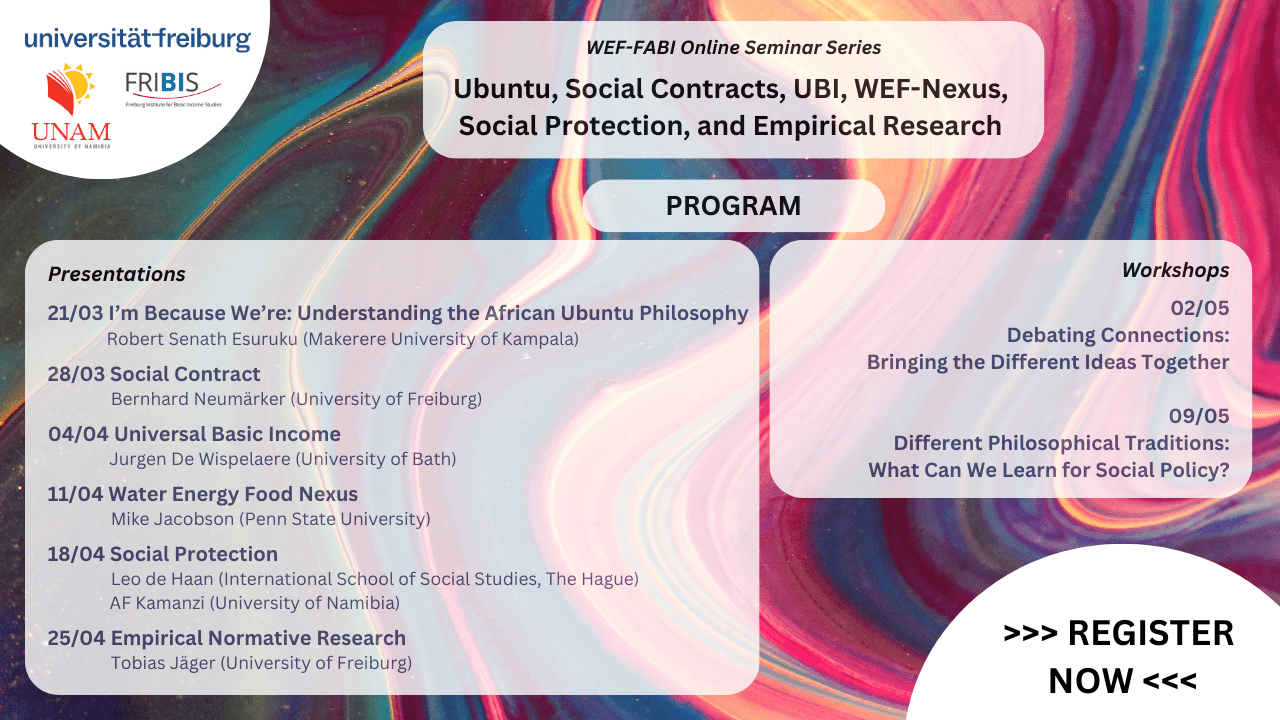
WEF-FABI Online Seminar Series: Ubuntu, Social Contracts, UBI, WEF-Nexus, Social Protection, and Empirical Research

Together with our partners at UNAM the WEF-FABI Team will host an online seminar series on “Ubuntu, Social Contracts, UBI, Water-Energy-Food Nexus, Social Protection, and Empirical Research,” starting on 21/03/2024. With assorted guests, the series will create a path of interconnections and differences between these topics and ask how their elements fit together. We want to examine how Ubuntu can be used in social experiments. Finally, the workshop findings will be incorporated into joint work (e.g. joint papers or field studies).

“Ubuntu” is a bond of unity amongst the people of Africa (Asike 2016, p. 7). In this sense, ubuntu is a philosophy that justifies norms and deliberate rules. With that, it touches common ground with the tradition of the social contract theory. In our series, we will follow various questions connecting these two traditions of thought: What are the main positions in these philosophical traditions? What are the similarities/differences between ubuntu and social contract theory? How can the shared features of the two of them be connected? We will then confront philosophical insights with the idea of a universal basic income and further link the various strings to possible impacts on social policy interactions. We take a look at the trade-offs between different policies and sharpen our awareness of the water-energy-food nexus and social protection. Finally, we will see how we can use empirical methods to normative justify policies and contribute to solving trade-offs.

If you are interested in a workshop, see the dates below and join (register) through the registration form on the workshop eventpage. The presentations are free to join using the zoom link provided in the event.

Program

All events will be held from 2 – 4 pm (CAT)

Presentations

21/03/2024       I’m Because We’re: Understanding the African Ubuntu Philosophy
Robert Senath Esuruku (University of Makerere, Kampala)

28/03/2024       Social Contract
Bernhard Neumärker (University of Freiburg)

04/04/2024       Universal Basic Income
Jurgen De Wispelaere (University of Bath)

11/04/2024       Water-Energy-Food Nexus
Mike Jacobson (Penn State University)

18/04/2024       Social Protection
Leo de Haan (International School of Social Studies, The Hague)
AF Kamanzi (University of Namibia)

25/04/2024       Empirical Normative Research
Tobias Jäger (University of Freiburg)

Workshops

02/05/2024       Debating Connections: Bringing the Different Ideas Together

09/05/2024       Different Philosophical Traditions: What Can We Learn for Social Policy?

Interview with Toru Yamamori (Doshisha University) from the Gender-Team on his stay in Freiburg

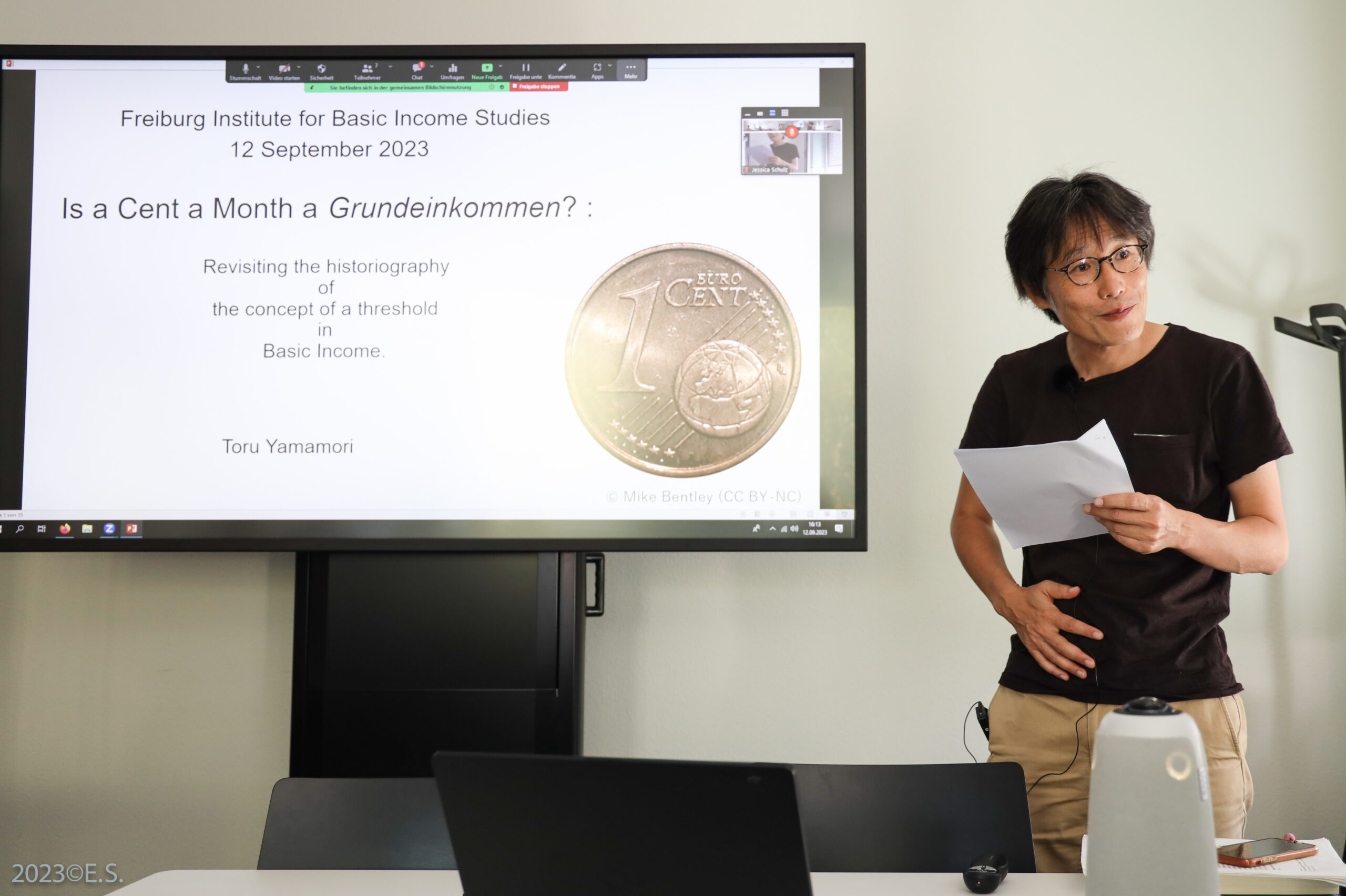
On a sunny Tuesday afternoon in Freiburg, Professor Toru Yamamori presented his paper as part of his guest stay at FRIBIS: Is a penny a month a basic income? A historiography of a threshold in basic income to the members of FRIBIS, as well as external interested listeners. The professor of economics at Doshisha University in Kyoto won the essay prize of the renowned journal Basic Income Studies for this paper for the second time.

As part of his work as co-chair of the BIEN working group on the clarification of basic income definitions, Toru Yamamori posed the question of whether a threshold for basic income should be included in the definition of basic income and gave an overview of the development of implicit and explicit definitions of basic income. The lecture, with the title kindly adapted to the German audience Is a cent a month a basic income? was followed by a lively discussion that continued into the evening hours during the subsequent joint dinner. We would like to thank Professor Toru Yamamori for his stimulating lecture, the professionally exciting and pleasant conversations during his stay and his work for the FRIBIS Gender Team, which after years of online meetings could finally meet partly in person.

How was your stay in Freiburg/at FRIBIS?

It was really great. I have been in UBI and Gender research team and have known Jessica and Clem for a few years, but this is the first time to meet them in person. Also, the head of FRIBIS, Prof. Neumärker, and the people in FRIBIS are friendly and made me feel like I am at a home institution.

What suprised you or you expected as a reaction to your lecture?

People listened to my lecture attentively and gave me important feedback. It is a shame I could not stay longer to communicate more, but I would like to come back to Freiburg again.

Follow-up report on the Science Talk at Liefmann-Haus

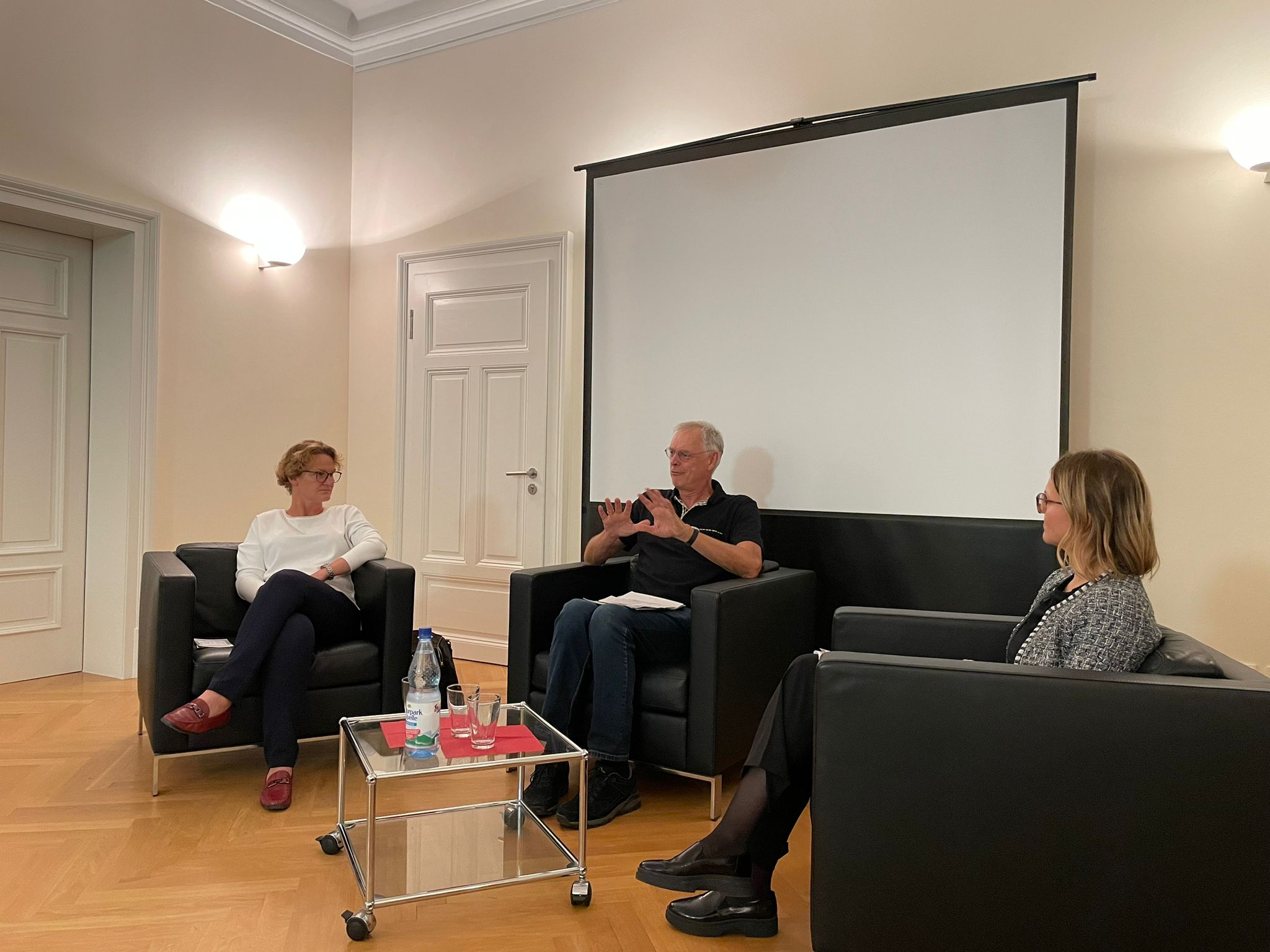
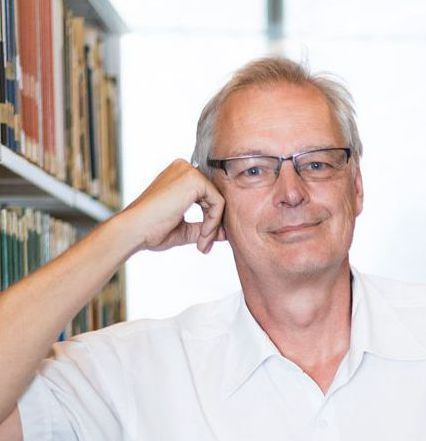
Many of the most pressing problems of our time, whether climate change, inflation or demographic change, have an economic connection. Dr. Denisa Sologon (Luxembourg Institute of Socio-Economic Research), Dr. Tanja Kirn, Ass.-Prof. (University of Liechtenstein) and Prof. Dr. Bernhard Neumärker (Götz-Werner-Professorship for Economic Policy and Theory of Order at the University of Freiburg/FRIBIS) discussed which solutions current economic research can offer at a Science Talk in the historic Liefmann-Haus at the University of Freiburg.

During the interactive exchange, possible approaches to mitigate undesirable effects of the above-mentioned problem areas were discussed. For example, Dr. Sologon shed light on the impact of inflation within Europe, pointing out that the inflation rate is higher for lower income groups because they consume a larger share of their income. This regressive effect, i.e., the higher burden on lower-income households, is also observed with the CO2 tax. According to Prof. Neumärker, this effect could be mitigated or eliminated if the resulting tax revenues were returned to the population through a so-called partial basic income. Dr. Tanja Kirn drew a parallel with the effects of rising health care costs in Switzerland and Liechtenstein. Here, too, a regressive burden effect is evident, she said. However, moving away from the concept of a uniform premium would mean a change in the system.

In order to find politically viable and economically sustainable solutions, detailed microsimulation analyses are necessary – a research area in which all researchers involved are active. The new Erasmus+ research project ecoMOD (Project: 2023-1-LI01-KA220-HED-000157594), in which Prof. Dr. Neumärker from the University of Freiburg/FRIBIS is involved as a project partner, aims to further develop existing models and strengthen the analytical skills of young scientists and students. The event took place within the framework of the ERASMUS Days, which raise awareness across Europe of the activities of ERASMUS+ projects co-funded by the European Commission.

Starting in Oct 2023: Politics of Basic Income Talk Series!

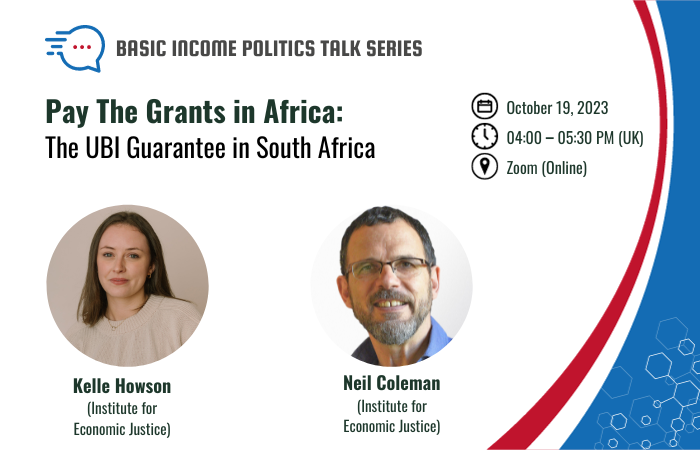
Starting in October 2023 and continuing monthly on every 3rd Thursday, join us for a global exploration of Universal Basic Income (UBI) politics, hosted by the Bath UBI Beacon and Freiburg Institute of Basic Income Studies (FRIBIS), in partnership with the Basic Income Earth Network (BIEN). Experts from around the world will share insights on UBI policy, movement building, and research.

Extended Information
The contemporary politics of universal basic income (UBI) conjures up a paradox. The level, breadth and sophistication of policy attention afforded to UBI is as impressive as it has ever been, with organisations such as the IMF and World Bank engaging with its potential to transform social protection. Experiments and pilots have emerged all over the world in Finland, South Korea, Kenya, Brazil and cities all across the US, while movement building has grown at an impressive rate in many countries. Yet, in terms of tangible policy development, progress has often been slow or non-existent. The introduction of a nationwide UBI scheme still eludes us and many social security systems have seen increasing levels of conditionality and means-testing rather than steps in a more universal direction. It is the perfect time for a global stock-taking of the opportunities and challenges facing UBI advocates, reflecting on policy successes as well as failures, and to ask the important questions needed to develop strategic thinking for building (inter)national movements and getting policy wins.

Hosted by the new Bath UBI Beacon and Freiburg Institute of Basic Income Studies (FRIBIS) through their Experiments Team collaboration, this online seminar series will invite people engaged in policy experimenting, movement building, research and activism from every corner of the globe to present their work and experience and reflect on what this means for the politics of basic income. Speakers will cover topics as diverse as experimentation, legislative processes, managing the media, fundraising, coalition building, community outreach and public opinion. The seminars will be open to all who have an interest in basic income and social policy more widely and will have a sizeable Q&A, allowing for discussion and debate. Seminars will be recorded and posted online afterwards.

Events will be scheduled for 90 mins and chaired alternately by Drs. Neil Howard and Joe Chrisp. If the event has a main speaker, presentations will last roughly 20 minutes followed by an hour of Q&A. For panels of 2-3 speakers, presentations will last 10 minutes each followed by an hour Q&A.

📅 Schedule (tentative):

Oct 2023             #PayTheGrants: The Universal Basic Income Guarantee in South Africa.

Nov 2023            How to Grow a Movement: The Importance of Strategic Funding & the Case of the US.

Dec 2023            What has happened in Catalunya?

Jan 2024             Basic Income and Reparations. Movement for Black Lives.

Feb 2024            Basic Income, De-Growth and Climate Politics.

Mar 2024           International Aid and the Politics of Unconditional Cash.

Apr 2024            UBI and UK Party Politics.

May 2024           UBI in CEE countries: Attention, Strategies and Reforms.

Jun 2024             How Much Public Support for Basic Income Is There?

Jul 2024              The Case of Marica in Brazil.

Aug 2024            The Case of India.

Sep 2024            The Policy Impact of Basic Income Experiments.

Oct 2024             The Case of Canada: Ontario, Climate Action Incentive Payment and COVID.

Nov 2024            What Happened in Iran?

Dec 2024            Welsh Pilot Results and Where from Here?

Jan 2025             UBI and Trades Unions.

International research project “ecoMOD” will be developing policy options for a resilient society

Starting in autumn 2023, a new research project named ecoMOD will be launched under the coordination of FRIBIS member Dr. Tanja Kirn. The goal is to evaluate policy options for a resilient society. Central to this are the effects of demographic change on old-age security, the causes of poverty and inequality and the possibilities of recovering CO₂ tax revenues.

The research project is co-funded by the European Commission, under the Erasmus+ funding program. Project partners are prominent institutions such as the Luxembourg Institute of Socio-Economic Research (LISER/Luxembourg), Freiburg University (Germany), NUI Galway (Ireland) and FPB Brussels / KU Leuven (Belgium).

Pensions – what reforms are needed to respond to demographic change?

Pay-as-you-go pension systems are coming under pressure from demographic change as life expectancy rises and fewer and fewer contributors are having to deal with more and more retirees. This raises the question of which reform options are most suitable. The spectrum ranges from an increase (coupling) in the statutory retirement age (to life expectancy), an age-dependent crediting of contribution years and thus a flexibilisation of retirement (and the pension amount), an increase in contribution rates, adjustment of survivors’ pensions, to an increase in incentives to work (beyond the statutory retirement age).

EcoMOD analyses the effects individual and combined reform measures have on future pension income. The project will also examine the effect of changes in labour force participation (e.g. an increase in the female labour force participation rate) on the pension system.

Poverty – what are the main causes of poverty and inequality?

The number of people permanently threatened by poverty has increased in Europe in recent years. One reason for this development is the rise in unemployment and the consequences of the financial crisis, which have led to lower household incomes in Europe. In addition, studies indicate that a university degree is no longer as strong a protection against poverty as it used to be. Instead, employment stability and good childcare facilities have played a more important role since the financial crisis. In addition, short- and long-term poverty reduction policies, such as those implemented during the COVID-19 pandemic and the energy price crisis, seem to have become more important.

EcoMOD aims to improve existing simulation models that depict impacts of economic crises on income distribution. Modules from geographic information systems will also be added to the models to identify regional patterns and develop spatial economic indicators.

Environment – how can revenues from a CO₂ tax be refunded?

CO₂ taxes are considered the most cost-effective lever to reduce carbon emissions swiftly and comprehensively in order to combat climate change. However, CO₂ taxes are generally regressive, meaning that the percentage tax burden decreases as income increases. So low-income households tend to spend a higher proportion of their income on emissions-intensive goods and services than higher-income households.

For this reason, ecoMOD is investigating ways to make the CO₂ tax more progressive, e.g. by redistributing the revenue from the CO₂ tax in favour of low-income groups, by reducing property and employment taxes or introducing a climate premium.

Dialogue between policymakers, the public and academia.

In addition to the further development of teaching and research, another goal of the project is to promote dialogue between policymakers, the public and academia. Therefore, we will use different information channels (print and online media) to inform the public about the project. The interim results will be presented at a conference in winter 2024/25 at the University of Liechtenstein. In addition, we will provide ongoing information about the project through evening lectures, blogs and podcasts.

Contributing Researchers

Prof. Dr. Bernhard Neumärker; Projectleader Albert-Ludwigs-Universität Freiburg

Dr. Tanja Kirn, Ass.-Prof.; Projectcoordinator & Projectleader Universität Liechtenstein

Dr. Denisa Solognon; Projectleader LISER – Luxembourg Institute of Socio-Economic Research

Prof. Cathal O’Donoghue; NUI Galway (contractual partner)

Dr. Gijs Dekkers; FPB Brussels, KU Leuven (associated partner)

Dr. Philippe Liégeois, LISER – Luxembourg Institute of Socio-Economic Research

Project: 2023-1-LI01-KA220-HED-000157594

Postdoc Lisa Reuter awarded the Erasmus Prize for the Liberal Arts and Sciences 2023

Lisa Reuter, who has been working as a Postdoc at FRIBIS since October 2022, has received the Erasmus Prize for the Liberal Arts and Sciences (€3,500) for her dissertation in psychology. The prize is awarded annually in two categories by the University College Freiburg. Her cumulative PhD thesis at the Institute of Psychology and the Cluster of Excellence, Living, Adaptive and Energy-autonomous Materials Systems (livMatS). It is entitled Bridging over the Troubled Waters of Quantitative and Qualitative Methods: Exploring Cognitive-Affective Maps in Empirical Research

In the field of basic income, Lisa Reuter is particularly interested in questions of social redistribution, socio-political narratives, conceptualizations of society and humankind, socio-ecological transformation, the commons and interdisciplinary research approaches.

Lisa Reuter’s PhD thesis: Limits and possibility of the method of Cognitive Affective Maps (CAMs).

“In her cumulative doctoral thesis at the Institute of Psychology and the University of Freiburg Cluster of Excellence “Living, Adaptive and Energy-autonomous Materials Systems” (livMatS), Dr. Lisa Reuter investigated the possibilities and limits of “Cognitive Affective Maps” (CAMs), a method developed by Paul Thagard. CAMs are maps that depict the content of a person’s or group’s belief system in the shape of visual networks, allowing them to be assessed as positive, negative, neutral, or ambivalent. This methodological approach is used in mixed methods research. Reuter applied CAMs to three different case studies and analysed the results. In her work, she used software that allows an individual to easily visualise experiences and impressions on a given topic – thereby making use of larger and standardised CAM data sets possible.

With the aid of CAMs, Reuter examined whether the cognitive-affective perceptions of the corona pandemic were altered by taking regular walks. A cross-sectional study that included participants from Germany and Canada was dedicated additionally to the perceived threat of the coronavirus. In a third study, Reuter investigated how the reproduction of natural phenomena is perceived during the development of new technologies. She also combined psychological and philosophical approaches in this work. Reuter cooperated with partners in political science and philosophy in her studies. She has arrived at the result that computer-aided applications of CAMs create bridges between qualitative and quantitative methods, adding that precisely during interdisciplinary work they unify of the advantages of both approaches.”

Source: Office of University and Science Communications, Freiburg University

Prof. Dr. Almaz Zelleke will be Visiting Professor at FRIBIS in October 2023

Following her keynote at this year’s FRIBIS annual conference, Almaz Zelleke, professor of Practice in Political Science at NYU Shanghai, and member of the FRIBIS team UBI and Gender, remains at FRIBIS for two weeks as a visiting professor. During her stay, she will give a workshop to FRIBIS PhD students on the topic how to Make the Best of Academic Conferences and share ideas with them about their research projects. After the visit of Prof. Dr. Toru Yamamori in September, the FRIBIS Gender team is particularly excited to have the opportunity to meet another team member in person and further engage in the exploration of UBI from a gender perspective.

Prof. Dr. Almaz Zelleke is a Professor of Practice in Political Science at NYU Shanghai. She specializes in UBI, including gender, political theory and public policy, feminist political theory, and comparative political economy. Her articles on basic income, distributive justice, welfare policy, and feminist political theory have been published in Basic Income Studies, Political Quarterly, Journal of Sociology and Social Welfare, Policy and Politics, Review of Social Economy, Journal of Socio-Economics, and Political y Sociedad. Lives in NYC, USA.

“The State Of The Art In Basic Income Policy” [Video Series] – Top 5 Authors Share Insights!

Welcome to our public lecture series on “The State Of The Art Of Basic Income Policy,” held and recorded in April and May 2023. Five researchers present their previously published papers, providing an in-depth look at their work. Professor Jurgen De Wispelaere, who is GWP visiting professor in the summer of 2023, is hosting the lecture series.
Assist.-Prof. Dr. Pilar Gonalons-Pons (University of Pennsylvania)
Dr. Leire Rincón (Autonomous University of Barcelona)

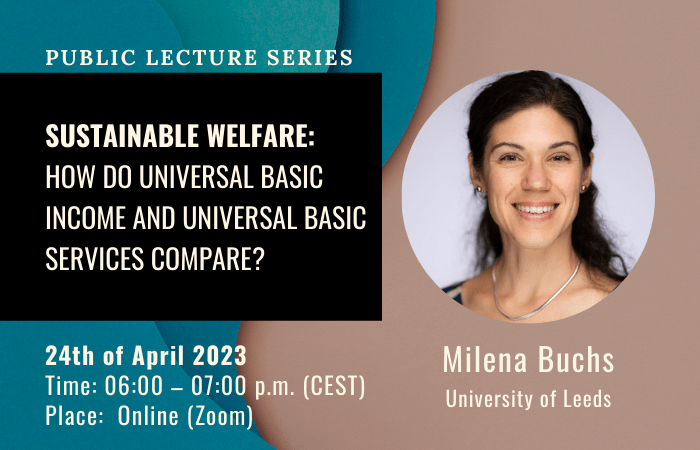
On Monday, 24th April 2023, Prof. Dr. Milena Buchs (University of Leeds) presented a lecture on Sustainable welfare: How do universal basic income and universal basic services compare?(article link).

Bio: Milena Buchs’s research focuses on sustainable welfare and just transitions. She has published widely on the relationship between economic growth and welfare states, and the question of how welfare states can be transformed so that everyone’s needs can be achieved within planetary limits. Several of her publications also focus on the distributional and justice implications of climate policies and measures that improve their distributional outcomes.

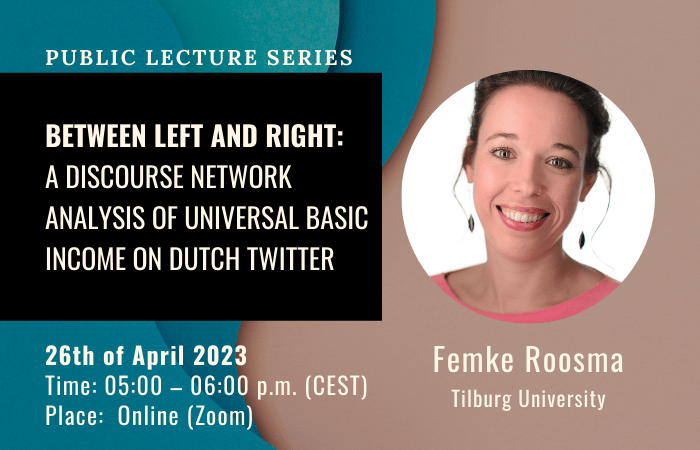
On Wednesday, 26th April 2023, Assit.-Prof. Dr. Femke Roosma (Tilburg University) presented a lecture on Between left and right: A discourse network analysis of Universal Basic Income on Dutch Twitter” (article link).

Bio: Femke Roosma’s research focusses on the legitimacy of social policies and welfare states. She studies multiple dimensions of support for the welfare state, solidarity and deservingness perceptions and support for universal basic income. Her research on basic income has appeared in leading journals in sociology and social policy.

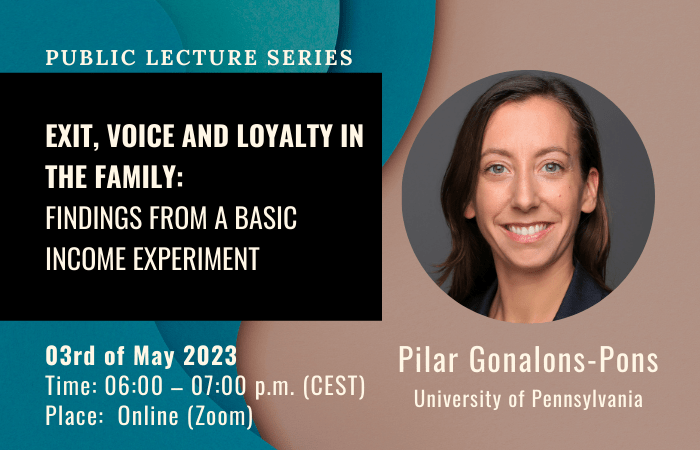
On Wednesday, 3rd May 2023, Assist.-Prof. Dr. Pilar Gonalons-Pons (University of Pennsylvania) presented a lecture on Exit, voice and loyalty in the family: findings from a basic income experiment(article link).

Bio: Pilar Gonalons-Pons’s research examines how work, families, and public policies structure economic inequalities. Much of her work, published in leading international journals in sociology and social policy, is guided by the overall goal to develop a comprehensive understanding about the political economy and gendering of care and reproductive paid and unpaid work and its contribution to economic inequalities.

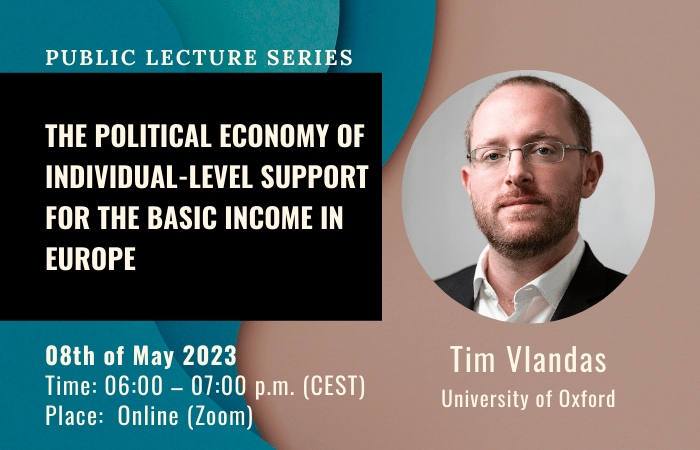
On Monday, 8th May 2023, Prof. Dr. Tim Vlandas (University of Oxford) presented a lecture on The political economy of individual-level support for the basic income in Europe(article link).

Bio: Tim Vlandas’s research interests are in comparative political economy with a particular focus on the determinants and consequences of social and economic policies. He has written several articles on basic income in leading international publications and in 2022 published Foreign States in Domestic Markets (Oxford University Press).

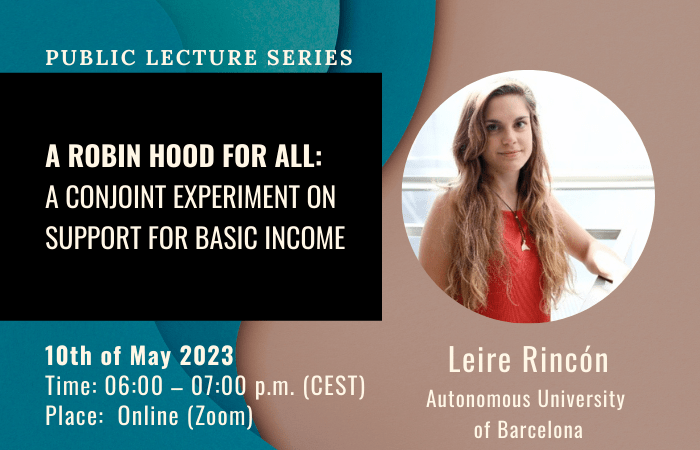
On Wednesday, 10th May 2023, Dr. Leire Rincón (Autonomous University of Barcelona) presented a lecture on A Robin Hood for all: a conjoint experiment on support for basic income (article link).

Bio: Leire Rincón recently completed a PhD in Political Science at the University of Barcelona and the Institut Barcelona d’Estudis Internacionals (IBEI), in which she looked at preferences for universal basic income and competing policy alternatives in comparative perspective. She has published several articles in leading policy journals examining public support for basic income. In addition to public opinion and political behaviour in relation to welfare policies and redistributive politics, in her recent research she also studies different aspects of gender-based violence.

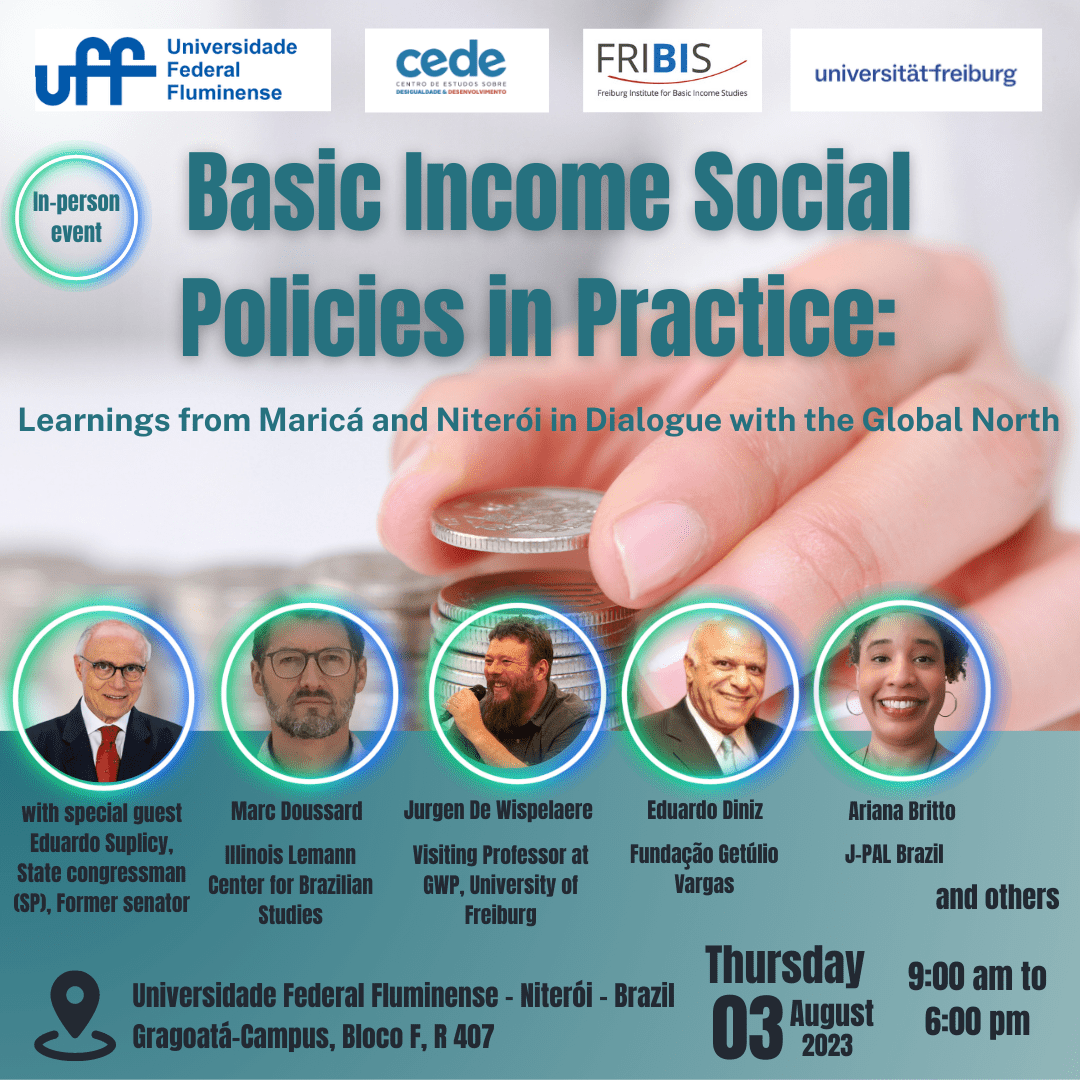
Workshop in Niterói, Brazil: Basic Income Social Policies in Practice – Learnings from Maricá and Niterói in Dialogue with the Global North

Since the early 2000s, the emergence and continuous growth of cash transfer programs define the main stage in the discussion surrounding the future of social protection. While established first in Latin America, programs focussing on direct cash transfers have spread throughout various countries and contexts. Parallelly, a debate developed on the advantages and disadvantages of the conditionality and unconditionality of cash transfers as social policy mechanisms.

The municipality of Maricá established the Renda Básica de Cidadania in 2013 and since then, expanded it majorly. Today, it is the largest basic income program in Latin America. It is based on the circulation of a digital community currency, called mumbuca, which creates a broad network of local exchange within the municipality. Meanwhile, the Moeda Social Arariboia in Niterói was established in its current form in 2022. While the Niterói policy carries some similarities with the policy in Maricá, it also differs in various points.

The goal of creating a social protection net brings both of them together. But what does this mean in practice? What are the impacts of these policies? How does the receiving of mumbuca/arariboia translate into the local economy? What difficulties and chances arise through the policies? How do these policies relate to ideas of solidarity economy? This workshop plans to look at the current state of implementation, evaluation, and research on the social policies in Maricá and Niterói, aiming to give an overview, relate to basic income ideas, and create a broad spectrum of exchange likewise.

Further, while innovative and ground-breaking, the policies of cash transfer cum local currency, as implemented in Maricá and Niterói, share features with policies, pilots, and experiments implemented throughout the world, particularly in the Global North. The second main objective of this workshop is to offer an opportunity for international researchers and policymakers based in Europe and the USA to talk about similar experiences observed elsewhere and to contribute to local researchers and policymakers to take stock of the virtues and limitations of the policies that are active in Maricá and Niterói currently.

Date/Location

When? August 3rd, 2023, 09:00 am – 06:00 pm
Where? UFF, Gragoatá-Campus, Bloco F, R 407, Niterói, Brazil

Further Remarks
Please, note that this workshop will take place in English. It will be held exclusively offline/in person at the location named above.

The organizers do not and shall not discriminate against any person on the basis of race, colour, national origin, gender, disability, or age (and any other bases you wish to include) who wish to participate in this event.

Click here for the schedule (PDF).