Basic Income for Peacebuilding (BIP)

Basic Income For Peacebuilding (BIP)

 

The Basic Income for Peacebuilding (BIP) research group aims to examine the applicability of Basic Income in post-conflict contexts for the purpose of supporting such societies advance towards resilience, sustainability and social peace.

The team has adopted an international perspective on its work in conflict research and focuses on three concrete case studies, which are at different stages in their processes of coming out of conflict, namely Northern Sri Lanka, Northern Ireland, Iraq and Syria.

Iraq and Syria
Limited research has been conducted thus far on the applicability of BI in the Middle East region characterized by authoritative regimes, prolonged periods of instability and conflict, weakened economies and state structures and enduring inequalities. FRIBIS member Diana Bashur (University of Vienna, Austria) has begun such research by considering the cases of Iraq and Syria. Diana is currently implementing a feasibility assessment of a Basic Income pilot in Northern Iraq as a complement to technical training activity.

Northern Ireland
The Northern Ireland (NI) FRIBIS members, Patrick Brown and John Barry of The Senator George J. Mitchell Institute at Queen’s University will host an academic conference in Belfast bringing together the FRIBIS team, leading UBI advocates and peacebuilding experts. Alongside this they will continue to advance plans to deliver a trial of UBI in NI framed as a ‘Peace Dividend’, as outlined in this proposal. Next steps in this process are to establish a steering group of stakeholders, primarily local authorities in Northern Ireland, many of whom have backed the idea of a UBI trial. A full feasibility study, akin to the one carried out in Scotland will follow.

A fourth focus is to examine from a conflict theory perspective how a UBI contributes to peaceful and solidarity-based structural change in society.

Publications:

  • M. Franke, B. K. J. Neumärker 2022: “A Climate Alliance through Transfer: Transfer Design in an Economic Conflict Model”, World 2022, 3(1), 112-125. https://doi.org/10.3390/world3010006

Research Team
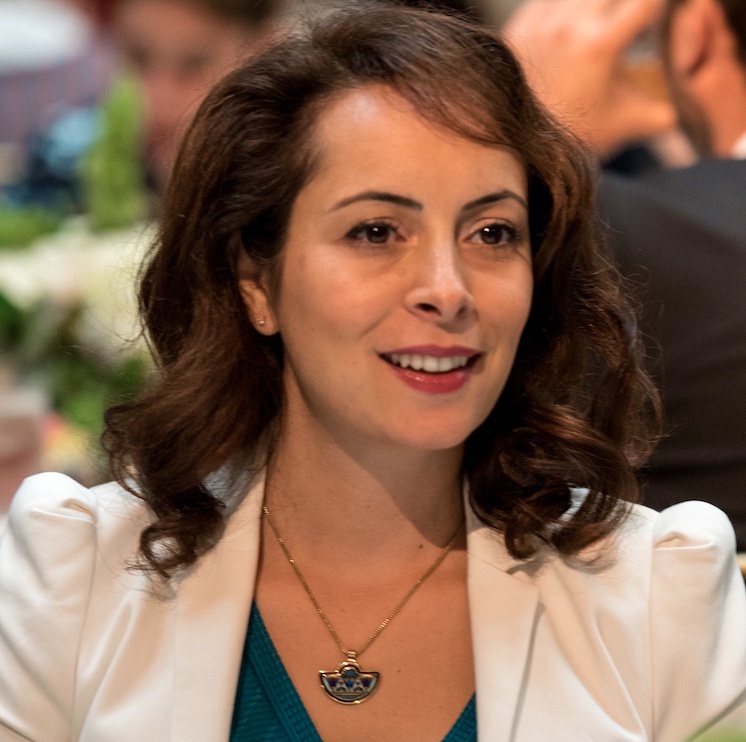
Diana Bashur
Doctoral Student, University of Vienna, Austria; Project Researcher, UNIDO (United Nations Industrial Development Organization)
Publications: “The Applicability of Universal Basic Income in Post-Conflict Scenarios: The Syria Case”, Basic Income Studies, June 2019, Volume 14, Issue 1
What the West Owes Syrians“, Syria Studies, 2018, 9(2), 31-59.

Patrick Brown,
PhD in Politics
Affiliations: The Senator George J. Mitchell Institute for Global Peace, Security and Justice, Queen’s University Belfast, UK; UBI Lab Northern Ireland; Basic Income Northern Ireland
Publication: “Testing a Real Peace Dividend for Northern Ireland: A proposal for Universal Basic Income” Working paper, October 2020
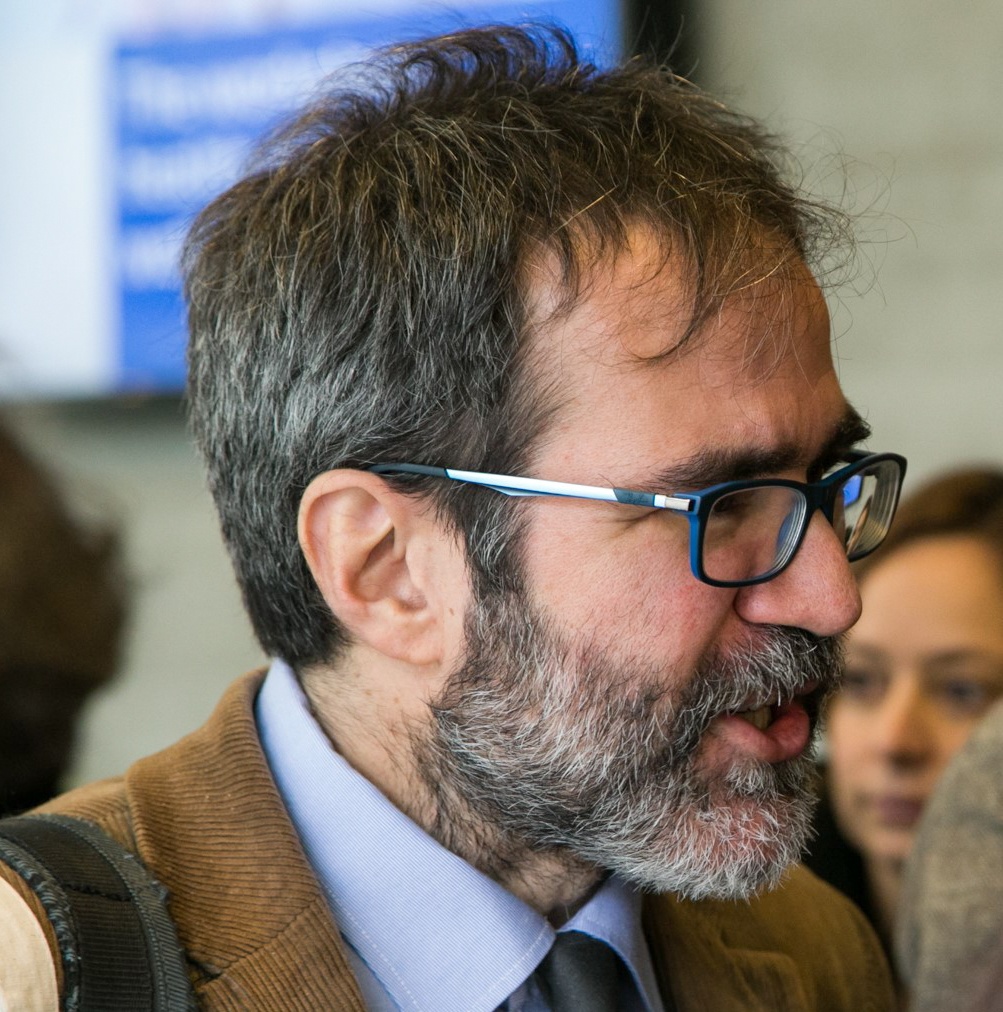
Prof. Dr. Roberto Leombruni​
is Assistant Professor at the University of Turin, Department of economics and statistics “Cognetti de Martiis”. His research topics include labour markets and retirement policies, work-health relations, agent-based microsimulations and administrative data.

Dr. Marcel Franke,
studied economics at the Albert-Ludwigs-University of Freiburg. He is active in the FRIBIS PostDoc Group, as well as in the FRIBIS FRIBIS Team “Basic Income for Peacebuilding”. His research focuses on unconditional basic income and philosophy of state, especially “Constitutional Economics” and “Economics of Social Justice”.

FRIBIS Team Coordinator
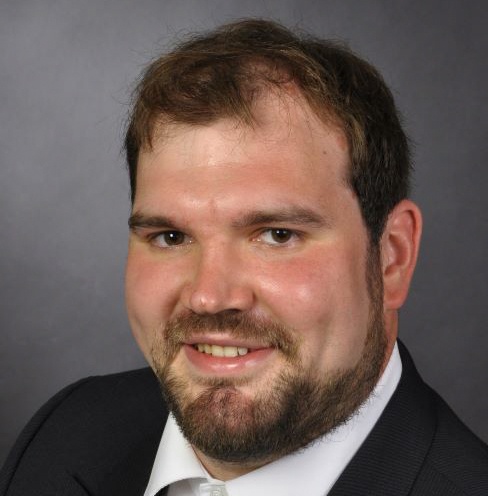
Tobias Jäger,
M.Sc. in economics, PhD candidate, Freiburg Institute for Basic Income Studies at the University of Freiburg, Germany

Contact: tobias.jaeger@fribis.uni-freiburg.de

.

Transfer Team
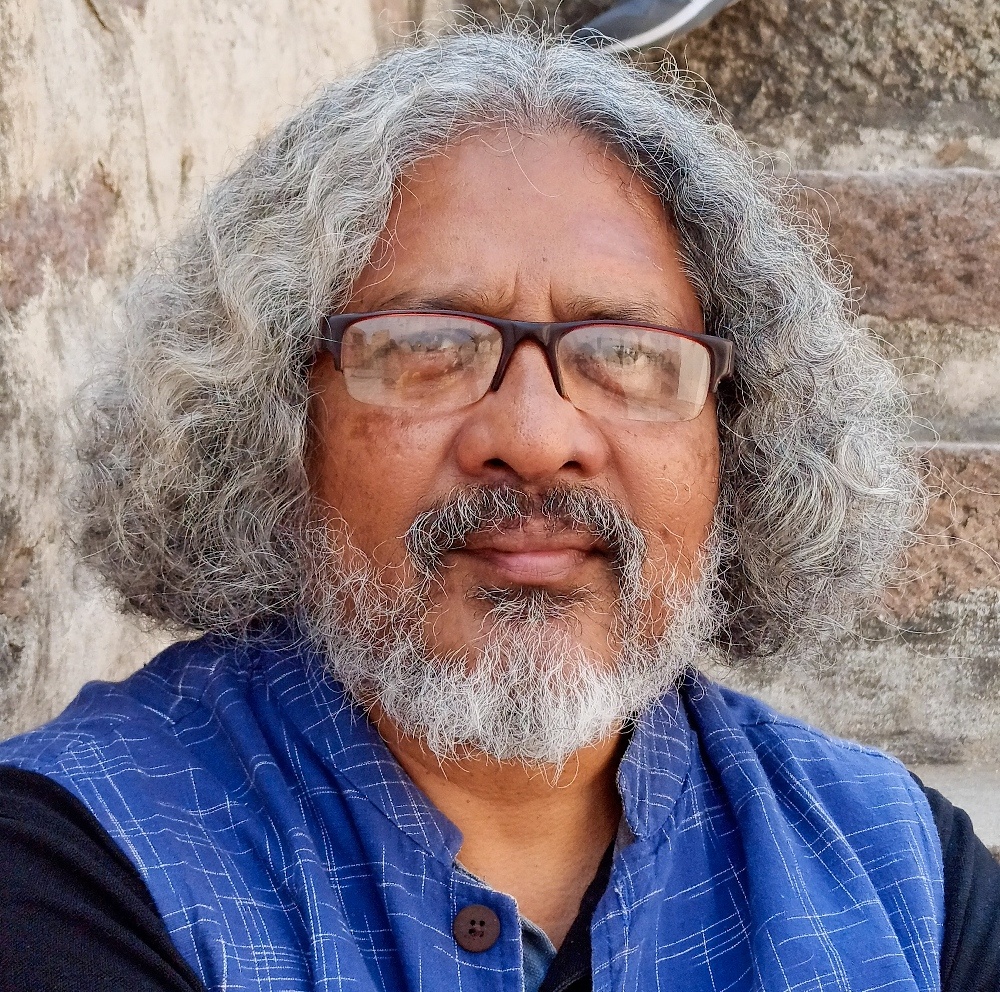
Dr. Sarath Davala
Chair of BIEN (Basic Income Earth Network), Coordinator of the Indian Network on Basic Income (INBI). Co-author of the book: “Basic Income: A Transformative Policy for India”,
Research Director of the Madhya Pradesh Basic Income pilot project 2011 to 2014, host of the BIEN World Congress in Hyderabad in 2019.
Hyderabad, India


.
Basisgeld

Basisgeld


Science, politics and policy making are combined in FRIBIS’ Basisgeld team. Here we are investigating the parameters of a partial Universal Basic Income known as “Basisgeld” in Germany. These parameters include the issues of guaranteed child allowance, education benefits, temporary income (in Switzerland), variants of benefit reduction rates for the citizen’s income and random experiments with UBI. We analyze recent studies on reform elements, e. g. microsimulation studies, draft legislation of Germany’s so-called traffic light (red-yellow-green) coalition as well as international experiences. The results of our studies will be published in the FRIBIS Discussion  and Policy Paper series and will also be communicated to decision-makers.

Discussion Paper and Policy Paper series and will be communicated to decision-makers.

October 17, 2024: FRIBIS “Basisgeld” team member in German parliament: MP Dr. Wolfgang Strengmann-Kuhn presents team leader Prof. Alexander Spermann’s concept (Video in German)

Research Team

Prof. Dr. Alexander Spermann
Prof. Dr. Alexander Spermann is a labor market expert who combines academic excellence with practical experience in the non-academic world. He has been Associate Professor at the University of Freiburg since 1999 and a Full Professor at FOM Cologne since 2018. He was Head of Department Labor Economics at the Centre for European Economic Research (ZEW) in Mannheim (2002-2007) and Director of Labor Policy Germany at the Institute for the Study of Labor (IZA) in Bonn (2014-2016). He has published more than 100 scientific contributions and has given more than 200 national and international lectures. Furthermore, he was director at an international stock-listed company (Randstad, 2007-2014). Spermann belonged as IZA director among the 100 most influential economists in Germany according to the FAZ ranking 2016. He leads a research group on “Partial basic income in Germany” at FRIBIS.

Prof. Dr. Ute Fischer
is full professor at the Department of Applied Social Studies. Her research, as economist and sociologist focuses on labour market development in a gender perspective as well as on the causes of poverty, (lack and forms of) democratic development and social politics. She is both member of the German initiative “Freedom Instead of Full Employment”, dealing with UBI, and of the scientific advisory board of the “Basic Income Network” in Germany.

Dr. Stefan Bach
ist wissenschaftlicher Mitarbeiter der Abteilung Staat im DIW Berlin. Seine Forschungs- und Beratungsschwerpunkte sind empirische Finanzwissenschaft, insbesondere Besteuerung, Sozialpolitik, Einkommens- und Vermögensverteilung sowie die Entwicklung von Mikrosimulationsmodellen zur Besteuerung und zur Sozialpolitik. Zu diesen Themen hat er zahlreiche Forschungs- und Beratungsprojekte geleitet. In den letzten Jahren führte Stefan Bach verschiedene Projekte zur Vermögensbesteuerung, zur Rentenreform und zur gesamten Steuerlastverteilung in Deutschland durch.

FRIBIS Team Koordinatorin

Jette Weinel
studied economics at the University of Freiburg and is currently completing her master’s degree in applied economics at the University of Vienna. Her research at the Götz Werner Professorship focuses on the implications of the Unconditional Basic Income on the utility function and tax revenue.

Transfer Team

Dr. Wolfgang Strengmann-Kuhn
Economist, doctorate and habilitation at Goethe-University Frankfurt, Senior Fellow at the Institute for Socialecology (ISÖ), since 2008 member of the Bundestag, 2007/08 Professor for Labour Economics at Goethe-University Frankfurt. Scientific focus: poverty research, labour market economics, reform of social security, basic income.

Thomas Viereck
is Diploma in Administration, University of applied Sciences and arts, Mannheim. He is Head of Product Development and Quality Assurance at Jobcenter Cologne.

BINC

Basic Income for Nature & Climate

Our team is interested in investigating the links between basic income, biodiversity conservation and climate change. The aim is to explore an innovative, practical and scalable approach to address the social and environmental challenges associated with climate change and biodiversity loss.

Basic Income, Climate Change Mitigation and Biodiversity Conservation

Basic Income for Nature and Climate (BINC) is a new mechanism for funding biodiversity conservation and climate change mitigation activities. The BINC proposal combines core Basic Income (BI) principles with environmental goals, aiming to protect biodiversity and mitigate climate change while reducing social inequity. BINC offers regular payments to communities near or within critical conservation or climate areas to support livelihoods, and reduce their dependence on exploitative and unsustainable resource extraction. In order to protect ancestral practices, encourage and/or incentivise new sustainable uses of forest resources, whilst also enabling freedom when choosing alternative development pathways, we believe that new financial mechanisms are needed for the inhabitants of these regions. In this context, basic income could play a central role in enabling the sustainable management of critical ecosystems.

Why BINC? How does it work?

BINC is a people-led approach. It recognises that in order to achieve justice, a much greater redistribution of resources is needed between those who have historically taken more and caused more harm, and those who continue to suffer injustices arising from environmental exploitation. It can be framed as a form of compensation for the unpaid labour many rural communities devote to activities that contribute to conservation outcomes, on lands under their control. By reducing oversight, cutting bureaucracy, and bypassing intermediaries, BINC empowers local communities and streamlines funding. Unlike current and popular market-based instruments (MBIs), BINC is an instrument of social justice.

Outlook: Scaling up BINC for a just and sustainable future

While BINC is not a silver bullet, it is by far the most scalable mechanism to address the polycrisis of climate breakdown, biodiversity loss and inequalities. BINC is part of a broader and more comprehensive programme for transformative change that also includes extractive industries encroaching on local conservation spaces and the establishment of improved governance frameworks and policies to enable those conditions. These must include the formalisation of land and tenure rights for Indigenous Peoples and Local Communities, since many of them live on lands that already contribute to conservation outcomes and/or are legally protected and excluded from land conversion.

The next step is to learn from existing BINC projects and use this learning to replicate BINC projects in other sites and at greater scale. This should be done in collaboration with local partners, guided by transdisciplinary research integrating economic, ecological, and sociological methods. This approach will generate insights to adapt and improve projects while developing a scalable model and best practices. As we work to transform conservation and climate financing to promote equity and sustainability, we invite donors and partners to join us in pioneering this innovative approach by implementing pilot projects for a more just and sustainable future.

How could a global BINC program be funded?

A key challenge for BINC is securing sustainable funding without relying on global environmental markets. Researchers have estimated that funding BINC globally would likely cost between USD 351billion and 6.73 trillion annually depending on the number of recipients and level of payment. These sums are already well within the scope of what is projected to be needed to scale up global conservation and climate action in the future. It is estimated that between 1/3 and 1/4 of the world’s total wealth is hidden in offshore tax havens. Global subsidies for environmentally harmful activities such as fossil fuel and conventional agricultural production are estimated at USD 2.6 trillion per year. If even a small portion of these funds were directed to BINC, it could easily fund implementation of a substantial international programme. Concrete financing sources for BINC have been proposed, such as linking it to climate change mitigation through the concept of a Forest Carbon Dividend or a “Cap and Share” mechanism proposed by the Cap and Share Alliance.

How FRIBIS contributes

The BINC working group is a joint initiative between FRIBIS and researchers based at the Autonomous University of Barcelona (Spain), Florida International University (USA), Freiburg University (Germany), UIII – Indonesian International Islamic University (Indonesia), Wageningen University (the Netherlands) and York University (Canada), as well as development agency GIZ (Germany) and NGOs Cool Earth (Peru, UK), GiveDirectly (Germany, UK) and WCS (Cambodia).

Further research will be conducted at FRIBIS to explore the feasibility of various BINC pilots, in order to test impacts on livelihoods and nature. FRIBIS provides scientific expertise, financial support, and facilitates advocacy and policy dialogue of the proposed basic income scheme at the international level. The long-term goal of our team is to implement a multi-year BINC project at scale, using the expertise of the members that constitute our group.

More from BINC:

  • BINC one-pager (identical with the text above)
  • BINC policy brief
  • BINC policy paper
  • Publication: Towards transformative justice in conservation finance: The case for Basic Income for Nature and Climate (BINC)
    By: Robert Fletcher, Georg Buchholz, Emiel de Lange; Isabel Felandro, Hanne Hotz, Ariana Kelman, Munib Khanyari, Lee Mcloughlin, Sonny Mumbunan, Bernhard Neumarker, Omar Saif, Martin Simonneau, Jim Stinson, Jocelyne Sze, Ben West
    In: Policy Matters 24 (2025), 190 – 199.

Learn more about Basic Income for Nature and Climate here:

FRIBIS Team Coordinator

Dr. Marcel Franke studied economics at the Albert-Ludwigs-University of Freiburg. He is also active in the FRIBIS Team “Basic Income for Peacebuilding”. His research focuses on unconditional basic income and philosophy of state, especially “Constitutional Economics” and “Economics of Social Justice”.
Contact: marcel.franke@vwl.uni-freiburg.de

Research Team

Dr. Sonny Mumbunan is an economist at the Research Centre for Climate Change of the University of Indonesia (RCCC UI). He is the founder of Basic Income Lab under RCCC UI, which is a new lab spearheading the scientific discussion on basic income for nature and climate in Indonesia. Sonny is also a senior economist at the World Resources Institute (WRI) Indonesia, where he coordinates the country work for the New Climate Economics. He wrote his dissertation at the Economics Department of the Helmholtz Centre for Environmental Research (UFZ) and earned his PhD in Economics (Dr.rer.pol.) from Universität Leipzig, Germany. Sonny lives in Jakarta, Indonesia and is an active member of the International Society for Ecological Economics (ISEE) and Indonesian Academy of Young Scientists (ALMI).
He lives in Jakarta, Indonesia
Jocelyne Sze (she/her) is a postdoctoral researcher at the Institute for Environmental Science and Technology at the Autonomous University of Barcelona, Spain (ICTA-UAB). She primarily works on how geospatial data are used in conservation and the relationships between Indigenous Peoples and conservation. She is also interested in degrowth and convivial conservation concepts such as the Basic Income for Nature and Climate. Her overarching interest is in forwarding equitable and effective conservation practices and policies.
Emiel de Lange is Conservation Impact Technical Advisor with the Wildlife Conservation Society (WCS) Cambodia program. He runs the Knowledge & Research team which implements and supports research activities in support of the WCS Cambodia program, working closely with academic, community and civil society partners. A particular focus is the Keo Seima Wildlife Sanctuary REDD+ program, where he works with the Bunong Indigenous people on developing rights-based approaches to conservation of biodiversity. BINC is one approach among others being explored in support of this. He completed his doctoral studies at the University of Edinburgh, UK, and now lives in Phnom Penh, Cambodia.
Omar Saif is a Post-Doctoral Fellow at the Wildlife Conservation Society, Cambodia. Omar’s research concerns how to make conservation practice more socially just by working directly with organisations. His present role centres on addressing shortcomings in how Benefit Sharing Mechanisms are conceptualised and designed in carbon projects. In his PhD, he studied the biodiversity conservation political landscape in Nepal, focusing on the barriers and challenges to including diverse voices and alternative practices within organizational structures. Taking a feminist political ecology approach, he broadly focuses on theories of trust, power and justice with a desire to promote counter-capitalist and decolonial forms of conservation.
Bernhard Neumärker is the head of FRIBIS and the Götz Werner Professor of Economic Policy and Director of the Department of Economic Policy and Order Theory at the University of Freiburg. For many years, he has been addressing issues of social justice, societal conflicts, and the willingness of the state to reform from an ordoliberal perspective. Recently, he has been applying his concepts of “New Ordoliberalism” (also called “Progressive Ordoliberalism”) and “Social Sustainability,” which stem from these issues, to the concept of unconditional basic income. He lives in Freiburg im Breisgau, Germany.

Transfer Team

Georg Buchholz is the team lead of the GIZ International Forest Policy programme in Eschborn, Germany, supporting the Federal Ministry for Economic Cooperation and Development (BMZ) on all international forest policy matters. Before that, he worked for over 25 years in Asia within the forestry and nature conservation sector. His last assignment was the Forest and Climate Change Programme (FORCLIME) in Indonesia, implemented by GIZ and Indonesia’s Ministry of Environment and Forestry, supporting policy development on forest and climate change at national and sub-national levels, including public financing options for Reducing Emissions from Deforestation and Forest Degradation (REDD+) and nature conservation. This was also the time when the idea of BINC was born in a joint effort with Dr. Sonny Mumbunan during a visit to West Papua. He graduated from the Faculty of Forestry in Freiburg, Germany, is an active member of the Basic Income Earth Network (BIEN) and the German Foresters Association, and now lives in Freiburg, Germany
Martin Simonneau is Advocacy Lead at Cool Earth, in charge of promoting the organisation’s innovative approach to forest conservation. Cool Earth is an international NGO that supports people who live in rainforests, as a way to combat biodiversity loss and climate change. Since 2008, they have been delivering unconditional cash transfers directly to people and communities and launched the first BINC pilot with Indigenous peoples in the Peruvian Amazon in 2023. He lives in Oxford, UK
Hannes Hotz is advisor for international forest policy at Deutsche Gesellschaft für Internationale Zusammenarbeit (GIZ) GmbH in Eschborn. He has worked for almost nine years in Peru on forest governance and sustainable forest management, both for GIZ and the Global Green Growth Institute (GGGI). He was also a research analyst at the German Institute of Development and Sustainability (IDOS) in Bonn and the German Advisory Council on Global Change (WBGU) in Berlin. He is an alumnus of IDOS´s Postgraduate Program for Sustainability Cooperation. He holds a B.Sc. in International Forest Ecosystem Management from the University of Eberswalde and an M.Sc. in Environmental Sciences from the University of Wageningen. He lives in Freiburg.
GiveDirectly is a charity based in New York City that uses an electronic payment system to combat poverty by providing direct cash transfers to people in need. Since then, it has been funded in part by prominent donors. In the context of the discussion on universal basic income, GiveDirectly has announced a large-scale field study that has gained international attention.

Associated Members

Lee Mcloughlin is currently a PhD candidate at the Department of Global Sociocultural Studies at Florida International University. Lee returned to academia after a decade working in Central America towards the improvement of protected area management, biodiversity conservation, and community livelihoods, working with local and international NGOs. In the latter part of this decade Lee also worked on the promotion and communication of the importance of the ‘Five Great Forests’ of Mesoamérica to regional and global audiences. His research looks at the dynamics of territoriality and decolonization in the biocultural assemblage of southern Belize, with broader interests in emerging decolonizing approaches to biodiversity conservation.
Robert Fletcher is Associate Professor in the Sociology of Development and Change group at Wageningen University in the Netherlands. He is an environmental anthropologist with research interests in conservation, development, ecotourism, globalization, climate change, social and resistance movements, and non-state forms of governance. He uses a political ecology approach to explore how culturally-specific understandings of human-nonhuman relations and political economic structures intersect to inform patterns of natural resource use and conflict. Among other publications, he is the author of Romancing the Wild: Cultural Dimensions of Ecotourism (Duke University, 2014) and Failing Forward: The Rise and Fall of Neoliberal Conservation (U of California, 2023), and co-author of The Conservation Revolution: Radical Ideas for Saving Nature beyond the Anthropocene (Verso, 2020).

care

Team care

The FRIBIS Team care does research on UBI with respect to care activities in society. Care activities, such as child-rearing, household chores, care for the elderly, psychological and spiritual care, speaking of activities on which every human society is based, do not, or only partially, appear in the national economic accounts (e.g. the GDP). They have therefore ascribed a low economic and social value, with all the implications that this entails. Thus the concept of care raises fundamental questions about our understanding of society, work, and values.
The idea of Basic Income brings a breath of fresh air into the debate about care activities. What does the introduction of basic income mean for care and the care economy? What would be the opportunities, challenges, and effects on the members of society and their various subsystems? What is the potential of basic income for social reorientation when it comes to caring? These and other questions will be addressed by the FRIBIS Team care.

Research Team

Prof. Dr. theol. Klaus Baumann
born 1963, studied theology in Freiburg (1983-85) and Rome (Pontificia Università Gregoriana, 1985-88) and received his ordination in 1989. 1989-1992 subsequent studies in psychology (1992 Lic. psych.); 1989-1993 psychotherapy training. 1992-1995 Teaching Assistant at Istituto di Psicologia, P.U. Gregoriana, Rome, and psychotherapeutic work ibid. 1993 STL (Lic. theol.) in moral theology, P.U. Gregoriana; 1996 STD (dissertation in theology) entitled „Das Unbewußte in der Freiheit. Ethische Handlungstheorie im interdisziplinären Gespräch“ (Analecta Gregoriana 270), Rome: Ed. PUG 1996, awarded with the „Premio Bellarmino 1996“. 1996-2002 pastoral care in Hinterzarten, Germany; 1996-2002 psychotherapeutic practice in Freiburg; 2003/04 Vice rector, Theological Faculty, Paderborn. Since 2004/05 Director, Department of Catholic Welfare Studies (Caritaswissenschaft), Institute of Practical Theology, University of Freiburg; 04/2008-02/2010 Assistant Dean, Theological Faculty; since 03/2010 Dean, Theological Faculty, University of Freiburg.
Founding director of the Freiburg Institute for Basic Income Studies (FRIBIS)
Lives in Freiburg, Germany.

Dr. Tobias Dumschat has studied Business Administration with a focus on ethics at the University of Cologne (B.Sc.) and at the RWTH Aachen (M.Sc.). Most recently he worked on the research project “Society after money: a simulation”. As a PhD candidate at FRIBIS he dealt with the question, what impact an UBI could have on the Care-Economy. In addition, he is interested in ethical and sociopsychological issues of the UBI.

Prof. Dr. Ute Fischer
is full professor at the Department of Applied Social Studies. Her research, as economist and sociologist focuses on labour market development in a gender perspective as well as on the causes of poverty, (lack and forms of) democratic development and social politics. She is both member of the German initiative “Freedom Instead of Full Employment”, dealing with UBI, and of the scientific advisory board of the “Basic Income Network” in Germany.
Lives in Unna, Germany

Gudrun Kaufmann
is a research assistant at FRIBIS. She studied economics at the University of Freiburg. From 2020 to 2022, she was actively involved in the development of FRIBIS as Managing Director. She was the coordinator of several teams, including Sanktionsfrei and BINC, and managed contracts as a staff member. Her main interests are narratives in economics, care economics and financialisation.

Dr. Verena Löffler
studied Politics, Administration & International Relations with a minor in Corporate Management & Economics (B.A.) at the Zeppelin University in Friedrichshafen and the University of California Berkeley. She holds two Master’s degrees in Public Policy (M.Sc.) and Economics (M.Sc.) from the University of Münster and spent one semester at the Aix-Marseille Université. She was a research assistant at the Institute for Economic Education at the Center for Interdisciplinary Economic Research at the University of Münster for five years. As part of her dissertation, she dealt with the basic income with regard to migration and the living situation of homeless people as well as the connection between wages in care work and family time allocation.
Lives in the Ruhr area

FRIBIS Team Coordinator

Franziska Leopold 
Master of Science: Business Administration Public and Nonprofit Management, University of Freiburg. Worked as a research assistant at the Götz Werner Chair of Economic Policy and Constitutional Economic Theory at the University of Freiburg and at the Frauenhofer ISE Freiburg. Lives in Freiburg, Germany

Contact: franziska.leopold@vwl.uni-freiburg.de

Transfer Team

Ronald Blaschke
is a graduate in education and phil., co-founder of the Basic Income Network Germany, the Federal Working Group on Basic Income in and at DIE LINKE Party, the European Network Unconditional Basic Income Europe (UBIE).
He is co-editor of several books and author of numerous articles on basic income and related topics. He coordinated the European Citizens’ Initiative “Unconditional Basic Income Across the EU” at the EU and German levels.
Lives in Dresden, Germany

Margit Appel
studied Political Science, Sociology, and Women’s Studies at the University of Vienna. As a research associate at the Catholic Social Academy of Austria, her work focused on foundational socio-political research and political adult education. She is a co-founder of the Network for Basic Income and Social Cohesion – BIEN Austria and is actively involved in the Austrian Anti-Poverty Conference. Now working as an independent author and speaker, she publishes and lectures on topics including democracy and participation, feminist economics, (care) work, and Universal Basic Income
Lives in Vienna,Austria

EUBIS

European Basic Income Scheme (EUBIS)

The EUBIS research team is developing a proposal for a European-level Basic Income scheme. The aim is to strengthen solidarity within the European Union and to equalize living conditions within Europe. The fiscal cost as well as the effects on income distribution of a pan-European transfer will be empirically assessed using EU-SILC data (EU-SILC = European Union Statistics on Income and Living Conditions) and microsimulation techniques.

The idea of a Universal Basic Income at the European level was developed by Philippe Van Parjis in 2013. While Van Parjis’ proposal aims at distributing the economic gains of the introduction of the euro fairly among the participating countries, the goal of our model is to strengthen solidarity within the European Union and to equalize living conditions in Europe. As the Corona and energy crises have shown, the countries of the European Union are highly interdependent not only in economic but also in social terms. It is therefore obvious to conceptualize social security systems in a common context as well.

The goal of the EUBIS project is to develop a robust projection that can serve as a basis for the introduction of a European Basic Income Model.

Research Team

Prof. Dr. Jörg Althammer
Professor of Business Ethics and Social Policy at the KU Eichstätt-Ingolstadt.

Dr. Maximilian Sommer
researches at the Institute for Employment Research (IAB) Nuremberg in the team “Basic Income Support and Labour Market” (GAMA).

FRIBIS Team Coordinator

Martin Mehl
Research associate at the chair of Professor Althammer.
M. Sc. Business Administration.
B.A. Sociology, Politics & Economics.

Contact: martin.mehl@ku.de

Microsimulation

Microsimulation

The themes of the research team concern the use of microsimulation to evaluate Universal Basic Income’s likely effects, in comparison to ‘status quo’ base scenarios as well as basic income ‘cognates’ and alternative policy reform proposals (such as in-work benefits, targeted social assistance, or other types of universal transfer). The main effects fall into the categories of fiscal costs and implications, distributional effects, and effects on financial labour market incentives, although there may be further applications of microsimulation techniques that fall outside this categorisation.

The aims of the research group are:

1. To develop and refine microsimulation techniques with respect to their application to basic income research, through expansion into more advanced areas such as:

  • Dynamic models of behavioural (labour market) response and lifecourse trajectories
  • Modelling implications for intra-household inequalities, by relaxing assumptions about income sharing within household
  • Modelling schemes organised at alternative levels (sub- and supra-national) of political organisation.

2. To carry out substantive studies on specific basic income proposals, such as the Euro-dividend, or other specific national or sub-national schemes. In particular, to scrutinise the detailed proposals of political parties and civil society / advocacy organisations groups, where these are available.   Project outputs would include ‘standard’ static analysis of fiscal, distributional and labour market effects, but would also extend to the more advanced / innovative areas mentioned above.

3. To provide a bank of technical expertise and resources (methodological literature). The aim would be to produce basic analysis of specific schemes on commission, for example in response to queries from policy makers, media, and other interested parties, as well as to facilitate the research community to carry out their own microsimulation studies. In this regard, one key role of the group would be to connect with other FRIBIS research groups.

Activity:


Research Team

Professor Nick Pearce
FAcSS, HFRIBA
Professor and Director of the Institute for Policy Research, University of Bath. Formerly Head of the No10 Downing Street Policy Unit and the IPPR think-tank. Principal Investigator on a number of research projects on Universal Basic Income. Subject Editor, Science, Policy and Society, Royal Society Open Science. Lives in London, UK.

Professor Ugo Colombino
PhD London School of Economics 1985, Professor Emeritus of Economics at the Department of Economics Cognetti De Martiis of the University of Torino and Research Fellow at the IZA.
He is a member of CHILD – Centre for Household, Income, Labor and Demographic economics, has published several contributions in the areas of incentives and income taxation, income support mechanisms, empirical optimal taxation, labor supply, preferences for environmental and cultural goods, demand for telecommunication services.

Dr. Valerija Korošec
Ph.D. in Sociology, University of Maribor, 2000; MESPA, 1994.
Undersecretary at the Institute of Macroeconomic Analyses and Development, Government of Slovenia, Social Policy Division, since 2001. An author of Slovenian UBI proposal (2010) and numerous articles on Universal Basic Income. A representative of Slovenia in BIEN, and founding member of UBIE, Universal Basic Income Europe. Lives in Ljubljana.

Dr. Aida Garcia-Lazaro
PhD in Economics, University of York, 2019. 
Macroeconomist and research associate at the Institute for Policy Research, University of Bath
Currently conducting research for the project The Economics of the Basic Income. Key areas of interest: monetary and macroprudential policies, inequality, labour market, migration and basic income. Prior to her PhD studies, Aida Garcia-Lazaro worked for the Mexican government and the United Nations in consultancy studies for two years. Lives in the West of England.

Professor Matteo Richiardi
Professor and Director of the Centre for Microsimulation and Policy Analysis, University of Essex.
A labour economist specialising in microsimulation and agent-based modelling techniques. Main areas of interests: inequality, worker insecurity, labour force participation, and wage dynamics.  
Board member of the International Microsimulation Association and Chief Editor of the International Journal of Microsimulation. Lives in Essex, UK.

Dr. Malcolm Torry
Visiting Fellow, Institute for Policy Research, University of Bath, and General Manager of Basic Income Earth Network (BIEN). Formerly a visiting senior fellow at the London School of Economics and Director of the Citizen’s Basic Income Trust.  Author of numerous books and articles on Universal Basic Income. Lives in London.

Dr. Joe Chrisp
Research Associate at Institute for Policy Research (IPR), University of Bath. Joe completed his PhD on the political feasibility of basic income in high-income countries at the IPR, University of Bath. Joe is an author of 15+ research papers on comparative politics, labour markets, welfare states and basic income. Lives in Bath, UK.

Jack Landry
Research Associate at the Jain Family Institute. Author of several microsimulation analyses of the expanded child tax credit. Formerly a research professional at the University of Chicago Harris School of Public Policy. Lives in Washington DC, USA.

FRIBIS Team Coordinator

Eric Qiao
Research Assosiate at the Institute for Policy Research, University of Bath. Specializes in applied microeconomics and public policy, with a focus on labour economics, especially labour supply, education and fiscal policy evaluation. Author of the essay series on labour supply in the UK. Lives in the West of England.

Contact: kq249@bath.ac.uk

Transfer Team

Jamie Cooke
Head of RSA Scotland. Jamie Cooke leads on the development of the RSA’s activity in Scotland, through innovative partnerships, projects and programmes of activity. Particular areas of interest include basic income, inclusive growth, the role of cities and Scotland’s relationship with the rest of the world. Lives in Scotland.

Cleo Goodman
Co-Founder of the Basic Income Conversation, an organisation dedicated to increasing and improving the debate around basic income in the UK. Cleo leads the Basic Income Conversation’s activities through their Research Network, work with civil society and political engagement. Her background is in the Scottish third sector and she is particularly interested in exploring community led and locally funded basic income models and demonstrations.

MUBINGO

Management of Universal Basic Income Non-Government Organizations (MUBINGO)

Promoting the concept of unconditional basic income through effective management of UBINGOs: a research from the perspective of social innovation and social marketing.

The project aims at developing effective social marketing approaches for non-governmental organizations that have made the realization of an unconditional basic income (UBI) their mission. In a first step, based on approaches of social innovation research this study strives at identifying the drivers of the acceptance of the unconditional basic income (i.e., the acceptance perspective). In addition, preferences for different forms of the uncondi- tional basic income in different population groups will be estimated. In a second step, to increase acceptance and support among citizens MUBINGO strives at designing effective social marketing strategies (i.e., the implementation perspective).

Research Team

Prof. Dr. theol. Klaus Baumann
born 1963, studied theology in Freiburg (1983-85) and Rome (Pontificia Università Gregoriana, 1985-88) and received his ordination in 1989. 1989-1992 subsequent studies in psychology (1992 Lic. psych.); 1989-1993 psychotherapy training. 1992-1995 Teaching Assistant at Istituto di Psicologia, P.U. Gregoriana, Rome, and psychotherapeutic work ibid. 1993 STL (Lic. theol.) in moral theology, P.U. Gregoriana; 1996 STD (dissertation in theology) entitled „Das Unbewußte in der Freiheit. Ethische Handlungstheorie im interdisziplinären Gespräch“ (Analecta Gregoriana 270), Rome: Ed. PUG 1996, awarded with the „Premio Bellarmino 1996“. 1996-2002 pastoral care in Hinterzarten, Germany; 1996-2002 psychotherapeutic practice in Freiburg; 2003/04 Vice rector, Theological Faculty, Paderborn. Since 2004/05 Director, Department of Catholic Welfare Studies (Caritaswissenschaft), Institute of Practical Theology, University of Freiburg; 04/2008-02/2010 Assistant Dean, Theological Faculty; since 03/2010 Dean, Theological Faculty, University of Freiburg.
Founding director of the Freiburg Institute for Basic Income Studies (FRIBIS)
Lives in Freiburg, Germany

Prof. Dr. Jörg Lindenmeier
2000-2004 Research assistant at the Chair of Marketing and Health Management (Prof. Dr. Dieter K. Tscheulin) at the University of Freiburg. Doctoral thesis on “Consequences of Yield Management for Customer Satisfaction: Conceptual Foundations and a Causal Analytical Consideration” (summa cum laude) and post-doctoral thesis on “Recent and Latest Developments in the Marketing of Profit-Oriented and Non-Profit-Oriented Companies: Considerations from the Perspective of (Consumer) Behavioral Research” (Venia Legendi for the subject Business Administration).
2012-2013 Professor for Health Care Management & Behavioral Economics at the Wissenschaftliche Hochschule Lahr and since 2013 Professor for Public and Non-Profit Management, in particular Corporate Governance and Ethics at the Universität of Freiburg. At hoc reviewer of numerous journals.
Lives in Lahr, Germany

Prof. Dr. Dieter K. Tscheulin
Studied Economics and Business Administration at the Justus Liebig University Giessen, Germany, and the Christian Albrechts University Kiel, Germany; stays abroad in Florence, Italy and Uppsala, Sweden, Junior Professor at the Université Notre-Dame de la Paix Namur, Belgium.
2008-2014 Dean of the Faculty of Economics and Behavioral Sciences at the University of Freiburg. Teaching positions at numerous national and international universities. Director of the Chair, Department of Marketing and Health Management, University of Freiburg.
Lives in Lörrach, Germany

FRIBIS Team Coordinator

Franziska Leopold
Master of Science: Business Administration Public and Nonprofit Management, University of Freiburg. Worked as a research assistant at the Götz Werner Chair of Economic Policy and Constitutional Economic Theory at the University of Freiburg and at the Frauenhofer ISE Freiburg.
Lives in Freiburg, Germany

Contact: franziska.leopold@vwl.uni-freiburg.de

Transfer Team

Ronald Blaschke
is a graduate in education and phil., co-founder of the Basic Income Network Germany, the Federal Working Group on Basic Income in and at DIE LINKE Party, the European Network Unconditional Basic Income Europe (UBIE).
He is co-editor of several books and author of numerous articles on basic income and related topics. He coordinated the European Citizens’ Initiative “Unconditional Basic Income Across the EU” at the EU and German levels.
Lives in Dresden, Germany

Karl-Heinz Blenk
describes himself as: Human, partner, father, friend. He is a founding member and board member of the BGE Allgäu e.V. and the “Better Place Organization” Common Good Society, registered association and a founding member of the German political party Basic Income Alliance. Professionally, he is a banker, organizational consultant and software developer.
Lives in Lauben near Kempten in the Allgäu, Germany

Joachim Winters
Studied law at the University of Freiburg, Germany, many years of self-employed commercial activity in various industries in external and in his own company.
Joachim Winters was project coordinator at the political party Basic Income Alliance and was a member of the Network Council of Network Basic Income Germany. He gives workshops on UBI and networks the topic with other socially relevant issues.
Lives in Göttingen, Germany

NetFi

Network Analysis and Financial Diaries (NetFi)

The Network Analysis and Financial Diaries (NetFi) team researches complementary and community currencies that use an Unconditional Basic Income as a distribution mechanism. As a methodological team, NetFi develops, among other things, programs and procedures that can be used to research these currencies. It is currently developing three different software solutions for this purpose – including a program that can be used to analyze graph-based network data.

In this context, both the macro-stabilizing effect (Stodder/Lietaer 2016) and the local multiplier effect are being studied, using flow motif detection (Iosifidis et al. 2018). In addition, the financial diaries method is further developed and extended with categorization techniques. Both methods allow for a closer examination of how complementary and community currencies can be used and the usage behavior of currency participants.

With its heterodox research methods, the NetFi team provides a methodological toolbox that all researchers may use free of charge, and in the use of which the FRIBIS team is happy to provide support and advice upon request. By not only developing research methods and programs, but also providing comprehensive and free advice to users of the corresponding programs, NetFi aims to act as an interface between science and activism.

Publications

Cabaña, G., Linares, J. Decolonising money: learning from collective struggles for self-determination. Sustain Sci 17, 1159–1170 (2022). https://doi.org/10.1007/s11625-022-01104-3 

Crocker, G., Lansley, S., Linares, J., Torry, M., Wadsworth, M. (2023). Alternative Funding Methods. In: Torry, M. (eds) The Palgrave International Handbook of Basic Income. Exploring the Basic Income Guarantee. Palgrave Macmillan, Cham. https://doi.org/10.1007/978-3-031-41001-7_12

Sowelu Avanzo, Teodoro Criscione, Julio Linares, and Claudio Schifanella. 2023. Universal Basic Income in a Blockchain-Based Community Currency. In Proceedings of the 2023 ACM Conference on Information Technology for Social Good (GoodIT ’23). Association for Computing Machinery, New York, NY, USA, 223–232. https://doi.org/10.1145/3582515.3609538

C. E. S. Mattsson, T. Criscione, and W.O. Ruddick, Sarafu Community Inclusion Currency, 2020-2021. Scientific Data 9:426, Nature Publishing Group, 2022. Link: https://www.nature.com/articles/s41597-022-01539-4

Teodoro Criscione, Eve Guterman, Sowuelu Avanzo, Julio Linares. Community Currency Systems: basic income, credit clearing, and reserve backed. Models and Design Principles Working paper. FRIBIS Discussion Paper Series, FRIBIS Paper No. 04-2022, 2022. doi:10.6094/FRIBIS/DiscussionPaper/8/04-2022

Mattsson, C.E.S., Criscione, T. & Takes, F.W. Circulation of a digital community currency. Sci Rep 13, 5864 (2023). https://doi.org/10.1038/s41598-023-33184-1

Sowelu Avanzo, Teodoro Criscione, Julio Linares, and Claudio Schifanella. 2023. Universal Basic Income in a Blockchain-Based Community Currency. In GoodIT 2023: ACM International Conference on Information Technology for Social Good, September 6-8, 2023, Lisbon, Portugal. Link Conference: http://goodit.campusfc.unibo.it/calls/

A. Gama, G. Hoon, J. Linares, T. Criscione, Towards a Municipalist Basic Income System, BIRAL Working paper, 2023. In 22nd BIEN Congress 2023, August 23-26, Seoul, Korea. Link Conference: https://biencongress2023.org/

Research Projects

Circles UBI Pilot Project. Link: https://joincircles.net/ 

Grassroots Economics – Sarafu Network. Link: https://www.grassrootseconomics.org/pages/sarafu-network 

Research Team

Prof. Dr. Janos Kertész
Full Professor and Head of the Department of Network and Data Science, Central European University, Vienna, Austria;
Ph.D. in Physics at the Eötvös University, Budapest, Hungary
Publications
Lives in Vienna, Austria

Sowelu Avanzo
Ph.D. student in Computer Science, University of Turin, Turin, Italy. Member of the research groups Digital Territories and Communities (Department of Computer Science, University of Turin) and CETR (ESOMAS, University of Turin).
Research Fellow of the Computer Science Department for the CO3 Project.
MSc in Finance, University of Turin, Turin, Italy. Master thesis on research fieldwork about the Sarafu currency network (Grassroots Economics) in Kenya.
Lives in Turin, Italy.

FRIBIS Team Coordinator

Teodoro Criscione
Ph.D. Student in Network Science at the Department of Network and Data Science at Central European University, Vienna, Austria.
BA in Development Economics and International Cooperation, University of Florence, Italy;
MSc in Economics, University of Siena, Italy; external research collaborator for community-led credit and monetary innovations at Italian National Research Council.
Lives in Vienna, Austria

Contact: teo.cri.1990@gmail.com

Transfer Team

Julio Linares
Co-President of Circles Coop eG.  in Berlin, and Social Outreach officer for the Basic Income Earth Network (BIEN). Originally from Guatemala, Julio is a founding member of the Basic Income Network in Taiwan. MSc. Anthropology and Development from the London School of Economics, London, UK. MA Applied Economics and Social Development, National Cheng Chi Univerisity, Taipei, Taiwan. Co-founder of the Community Currency Alliance.
Lives in Berlin, Germany

Giulio Quarta
Co-founder and director of Crypto Commons Association, promoting the general development of Commons-centric decentralized infrastructures through contents, research, courses and events.
Post-capitalist activist and co-founder of the Commons Hub in Austria, where he lives. Master degree in Sociology, especially focused on sociology of economics, STS and post-colonial studies, marxist approach.
He lives in Hirschwang an der Rax, Austria.

Participation & UBI

Participation and UBI – ‚Narratives‘ of the Future (PartUBI)

The relationship of universal basic income (UBI) to democracy – not only in its direct, participatory form but also as an economic ‘narrative’ – and its role as a ‘narrative’ have recently been identified as research desiderata by scholars from a number of disciplines (philosophy, sociology, economics, etc.) and has been investigated to some extent already. The theoretical part (Research Team) of our Large FRIBIS Team (LFT) Participation and UBI – ‘Narratives’ of the Future (PartUBI) follows and continues this discussion.

The activist part of the team (Transfer Team) is politically committed to the introduction of a UBI while at the same time seeing it as a participatory instrument for citizens to get more involved in democratic processes – e.g. through petitions for the introduction of a BGE, as dealt with in the Petitions Committee of the German Bundestag in 2010 and 2020. This, moreover, builds bridges to a politically engaged (theory of) visual art, especially to Joseph Beuysʼ concept of the “social sculpture”.

The view that a basic income would have a positive impact on people’s participatory opportunities has been repeatedly postulated politically and discussed within academia for several years now. Compared to the consideration of UBI from the viewpoint of participation, the conceptualisation of and research on the UBI as an economic-political ‘narrative’ is a more recent phenomenon. This can be seen in the broader context of a remarkable general boom of the concept of narratives in contemporary Western culture: in various cultural fields, such as politics, economics and science, there has been increasing talk of ‘narratives’ since the turn of the millennium. Examining the UBI as an economic ‘narrative’ from a philosophical-cultural studies perspective is another focus of the LFT.

The theoretical, political and praxeological connections between UBI and participation, the associated discursive ‘future practices’ and the history of discourse and research will be comprehensively reconstructed and examined from a philosophical-transdisciplinary perspective in Leon Hartmann’s dissertation (Working title: Zukünfte der Demokratie. Zum Verhältnis von politischer Partizipation und bedingungslosem Grundeinkommen. / Futures of Democracy. On the relationship between political participation and unconditional basic income).

 
Publications

Leon Hartmann, Sebastian Kaufmann, Bernhard Neumärker & Andreas Urs Sommer (Hg.) (2024): Politische Partizipation und bedingungsloses Grundeinkommen – ‘Narrative’ der Zukunft / Political Participation and Universal Basic Income – ‘Narratives’ of the Future. Berlin: LIT.
https://www.lit-verlag.de/isbn/978-3-643-15416-3

Leon Hartmann & Sebastian Kaufmann (2024): Zur Einführung: Politische Partizipation und bedingungsloses Grundeinkommen – ‚Narrative‘ der Zukunft. In: Leon Hartmann, Sebastian Kaufmann, Bernhard Neumärker & Andreas Urs Sommer (Hg.): Politische Partizipation und bedingungsloses Grundeinkommen – ‘Narrative’ der Zukunft. / Political Participation and Universal Basic Income – ‘Narratives’ of the Future. Berlin: LIT, 9–30.
https://www.lit-verlag.de/isbn/978-3-643-15416-3

Sebastian Kaufmann (2024): Das bedingungslose Grundeinkommen als ökonomisches ‘Narrativ’? Überlegungen zum narrative turn in den Wirtschaftswissenschaften am Beispiel von Robert Shillers Narrative Economics (2019). In: Leon Hartmann, Sebastian Kaufmann, Bernhard Neumärker & Andreas Urs Sommer (Hg.): Politische Partizipation und bedingungsloses Grundeinkommen – ‘Narrative’ der Zukunft / Political Participation and Universal Basic Income – ‘Narratives’ of the Future. Berlin: LIT, 215–236
https://www.lit-verlag.de/isbn/978-3-643-15416-3

Leon Hartmann (2024): Grundeinkommen und die Zukunft der (Spät-)Moderne. Diskursive Praktiken und Wissensordnungen der Zukunft in der Geschichte des Grundeinkommens von ca. 1945 bis zur Gegenwart. In: Leon Hartmann, Sebastian Kaufmann, Bernhard Neumärker & Andreas Urs Sommer (Hg.): Politische Partizipation und bedingungsloses Grundeinkommen – ‘Narrative’ der Zukunft / Political Participation and Universal Basic Income – ‘Narratives’ of the Future. Berlin: LIT, 55–120.
https://www.lit-verlag.de/isbn/978-3-643-15416-3

Sommer, Andreas Urs (2024): Bedingungsloses Grundeinkommen und direkt-partizipatorische Demokratie. In: Leon Hartmann, Sebastian Kaufmann, Bernhard Neumärker & Andreas Urs Sommer (Hg.): Politische Partizipation und bedingungsloses Grundeinkommen – ‘Narrative’ der Zukunft / Political Participation and Universal Basic Income – ‘Narratives’ of the Future. Berlin: LIT, 287–292.
https://www.lit-verlag.de/isbn/978-3-643-15416-3

Robert Krause (2024): Das Bedingungslose Grundeinkommen: Zur Kultur- und Ideengeschichte einer notwendigen Utopie. Eine Projektskizze. In: Leon Hartmann, Sebastian Kaufmann, Bernhard Neumärker & Andreas Urs Sommer (Hg.): Politische Partizipation und bedingungsloses Grundeinkommen – ‘Narrative’ der Zukunft / Political Participation and Universal Basic Income – ‘Narratives’ of the Future. Berlin: LIT, 45–53.
https://www.lit-verlag.de/isbn/978-3-643-15416-3

Milan Wenner (2024): The Narrative of the “Great Displacement”. Universal Basic Income As a Way Out of Technology-Induced Unemployment?. In: Leon Hartmann, Sebastian Kaufmann, Bernhard Neumärker & Andreas Urs Sommer (Hg.): Politische Partizipation und bedingungsloses Grundeinkommen – ‘Narrative’ der Zukunft / Political Participation and Universal Basic Income – ‘Narratives’ of the Future. Berlin: LIT, 237–247.
https://www.lit-verlag.de/isbn/978-3-643-15416-3

Sören E. Schuster (2024): Freiheit und Notwendigkeit nach der Lohnarbeit. Nietzsches Auseinandersetzung mit Herrmann im Lichte des BGEs. In: Leon Hartmann, Sebastian Kaufmann, Bernhard Neumärker & Andreas Urs Sommer (Hg.): Politische Partizipation und bedingungsloses Grundeinkommen – ‘Narrative’ der Zukunft / Political Participation and Universal Basic Income – ‘Narratives’ of the Future. Berlin: LIT, 121–145.
https://www.lit-verlag.de/isbn/978-3-643-15416-3

Sabine Scharff (2024): BGE und Kryptowährungen: Ein partizipatives Dilemma. In: Leon Hartmann, Sebastian Kaufmann, Bernhard Neumärker & Andreas Urs Sommer (Hg.):  Politische Partizipation und bedingungsloses Grundeinkommen – ‘Narrative’ der Zukunft / Political Participation and Universal Basic Income – ‘Narratives’ of the Future. Berlin: LIT, 293–298.
https://www.lit-verlag.de/isbn/978-3-643-15416-3

Susanne Wiest (2024): Bedingungsloses Grundeinkommen – ein Praxisbericht. In: Leon Hartmann, Sebastian Kaufmann, Bernhard Neumärker & Andreas Urs Sommer (Hg.): Politische Partizipation und bedingungsloses Grundeinkommen – ‘Narrative’ der Zukunft / Political Participation and Universal Basic Income – ‘Narratives’ of the Future. Berlin: LIT, 341–348.
https://www.lit-verlag.de/isbn/978-3-643-15416-3

Michael von der Lohe (2024): Joseph Beuys, das Grundeinkommen, die Soziale Plastik und sein erweiterter Kunst- und Arbeitsbegriff. In: Leon Hartmann, Sebastian Kaufmann, Bernhard Neumärker & Andreas Urs Sommer (Hg.): Politische Partizipation und bedingungsloses Grundeinkommen – ‘Narrative’ der Zukunft / Political Participation and Universal Basic Income – ‘Narratives’ of the Future. Berlin: LIT, 357–363.
https://www.lit-verlag.de/isbn/978-3-643-15416-3

Leon Hartmann (2023): Narrativistik und Grundeinkommen. Eine neue Technik der Regierung?. In: Bernhard Neumärker & Jessica Schulz (Hg.): Basic Income and Development. Proceedings of the FRIBIS Annual Conference 2022. Wien: LIT 2023, 161–196.
https://www.lit-verlag.de/isbn/978-3-643-91641-9

Leon Hartmann & Sebastian Kaufmann (19. April 2022): Bedingungsloses Grundeinkommen und politische Partizipation als ‘Zukunftsnarrative’. FRIBIS Policy Debate Paper 04/2022.
https://www.fribis.uni-freiburg.de/wp-content/uploads/2022/04/LH_SK_PolicyPaper_19.04.22.pdf

Leon Hartmann (2022): Universal Basic Income as a Discursive Formation of the Future. Sketch of a Discourse Analysis, Universal Basic Income as a Discursive Formation of the Future. Sketch of a Discourse Analysis. In: Bernhard Neumärker & Jessica Schulz (Hg.): Financial Issues of a Universal Basic Income (UBI). Proceedings of the FRIBIS Annual Conference 2021. Münster: LIT, 195–201.
https://www.lit-verlag.de/isbn/978-3-643-91512-2

Leon Hartmann (17. Mai 2022): Die „Zukunft der Arbeit“. Kommentar zur Sendung von Markus Lanz am 14. April 2022 und zur 36. Folge des Podcasts Lanz & Precht vom 06. Mai 2022. FRIBIS Policy Debate Paper 05/2022.
https://www.fribis.uni-freiburg.de/wp-content/uploads/2022/05/Leon-Hartmann_FRIBIS-Policy-Paper_20220517.pdf

Andreas Urs Sommer (2022): Eine Demokratie für das 21. Jahrhundert: Warum die Volksvertretung überholt ist und die Zukunft der direkten Demokratie gehört. Freiburg i. Br.: Herder.
https://www.herder.de/geschichte-politik/shop/p4/72754-eine-demokratie-fuer-das-21-jahrhundert-klappenbroschur/

Sören E. Schuster (gemeinsam mit Georg N. Schäfer) (2022): Mapping Mainstream Economics. Genealogical Foundations of Alternativity. London: Routledge.
https://www.routledge.com/Mapping-Mainstream-Economics-Genealogical-Foundations-of-Alternativity/Schafer-Schuster/p/book/9781032262192

Michael von der Lohe (2022): The Enterprise Basic Income. A Proposal for Integrating the Unconditional Basic Income in a Coherent Form of Money Circulation. In: Bernhard Neumärker & Jessica Schulz (Hg.): Financial Issues of a Universal Basic Income (UBI). Proceedings of the FRIBIS Annual Conference 2021. Münster: LIT, 205–209.
https://www.lit-verlag.de/isbn/978-3-643-91512-2

Research Team

Prof. Dr. Sebastian Kaufmann
born 1979, studied philosophy, ancient history and modern German literature at the University of Freiburg, Magister Artium 2007, doctorate 2011, habilitation 2018, from 2013 to 2023 sub-project leader at the of the research unit “Nietzsche-Kommentar” at the Heidelberg Academy of Sciences and Humanities. Since 2022, he has been an adjunct professor at the Institute for Modern German Literature at the University of Freiburg; he is leading the research team of PartUBI since 2022.
Lives in Freiburg im Breisgau

Robert Krause, PD Dr.
comparative literature and cultural studies scholar, born 1980, studied German language and literature, history and philosophy at the Albert-Ludwigs-University of Freiburg as well as Romance studies and art history at the universities of Strasbourg and Seville, Magister Artium 2007, doctorate 2010, habilitation 2019. Krause is an academic assistant at the German Seminar of the Albert-Ludwigs-University of Freiburg, from February 2023 to July 2023 visiting professor at Iméra, Institut d’études avancées in Marseille with the research project “The Unconditional Basic Income: towards a cultural and intellectual history of a necessary utopia”, from July until december 2023 academic assistant in the PartUBI team project.

Alina Plitman, M.A.
is a doctoral student supervised by Prof. Dr. Andreas Urs Sommer at the Philosophy Department of the University of Freiburg. She completed her studies in economics at the Ruhr University Bochum. At the University of Stuttgart, Ms Plitman completed her Bachelor’s and Master’s degrees in Philosophy. Ms Plitman’s main research interests are applied ethics, economic ethics and political philosophy. Her dissertation is concerned with the concept of an unconditional basic income. It focuses on the concept of work, its revision and incorporation into theories of justice. Alina Plitman is a member of the Junior Research Group at FRIBIS and at the Society for Business Ethics.
Lives in Stuttgart

Prof. Dr. Andreas Urs Sommer
born in 1972, studied philosophy, church and dogma history and German literature in Basel, Göttingen and Freiburg im Breisgau, licentiate in 1995, doctorate in 1998 at the University of Basel, habilitation in 2004 at the University of Greifswald, from 2014 to 2023 head of the research unit “Nietzsche-Kommentar” at the Heidelberg Academy of Sciences and Humanities, since 2016 W3 professor of philosophy with a focus on cultural philosophy at the Albert-Ludwigs-University of Freiburg. His most recent book publications deal with questions of political philosophy, namely Eine Demokratie für das 21. Jahrhundert. Warum die Volksvertretung überholt ist und die Zukunft der direkten Demokratie gehört (Herder 2022) and Entscheide dich! Der Krieg und die Demokratie (Herder 2023).
Lives in Freiburg im Breisgau

Milan Wenner, M. A.
is currently a PhD student in philosophy at the University of Freiburg (Germany). His dissertation deals with anti-modernist narratives of decline in the ‘long 20th century’. He is also working on the UBI in the context of political philosophy and the philosophy of history. His research on the narrative of the Great Displacement connects both of Wenner’s aforementioned research areas. This is why he is particularly interested in the use of the narrative of technology-induced unemployment and its potential as a meta-political tool for Basic Income advocates.
Lives in Freiburg im Breisgau

FRIBIS Team Coordinator

Leon Hartmann, M. A.
studied philosophy and German literature in Freiburg. He is currently a doctoral candidate in philosophy at the University of Freiburg and works as a research assistant at FRIBIS. In his dissertation, he analyses historical and contemporary conceptions of the future in the context of unconditional basic income, political participation and direct democracy. In doing so, he primarily examines discursive future practices and associated semantics as well as reflections on governmental techniques. Special attention is paid to the concept of the ‘narrative’ and its implications for the social negotiation of the future.
Lives in Freiburg im Breisgau
Contact:
leon.hartmann@philosophie.uni-freiburg.de
leon.hartmann@fribis.uni-freiburg.de

Transfer Team

Michael von der Lohe
Dipl. Ing. Photoingenieurwesen, born in 1953, has been an employee of OMNIBUS FÜR DIREKTE DEMOKRATIE gGmbH since 2000. He has been managing director there since 2004. He was a self-employed photo designer from 1978 to 2014 and won the Kodak European Award for professional photographers in 1988. In 1992, he developed a chemical process for burning silver halide emulsions onto ceramic substrates. From 2000 to 2006 he was an employee at the company Wirtschaft und Kunst – erweitert gGmbH in Frankfurt.
Lives in Hattingen, Germany

Susanne Wiest
has been advocating for the introduction of an universal basic income in Germany since 2008. Long-standing and also more recent partners in this free field of work include organisations such as the OMNIBUS FÜR DIREKTE DEMOKRATIE, collaborators of the initiative Freiheit statt Vollbeschäftigung, Uschi Bauer, initiator of the Krönungswelle, and since 2020 the Freiburg Institute for Basic Income Studies (FRIBIS). Central and fundamental was the inspiring cooperation with Götz Werner. Since 2022 Susanne Wiest has been chairperson of Mensch in Germany e. V.
Lives in Alt Tellin, Germany

Associated Members

Philip Kovce
is an external doctoral candidate at the Götz Werner Chair of Economic Policy & Constitutional Economic Theory at the University of Freiburg. He also conducts research at the Philosophicum Basel, teaches in the Studium fundamentale at the University of Witten/Herdecke, and writes as a freelance author for the press and radio. Numerous publications on unconditional basic income, including, together with Birger P. Priddat Bedingungsloses Grundeinkommen. Grundlagentexte (Suhrkamp 2019).

Sabine Scharff, M. A.
is author, doctoral candidate in philosophy at the Albert-Ludwigs-University of Freiburg and mother. She completed her Master of Arts in Philosophy, Art History and German Studies at the Ludwig-Maximilians-University in Munich and worked for many years as a research assistant and project coordinator at the Staatliche Hochschule für Gestaltung Karlsruhe and the ZKM Karlsruhe. She realised various international and transdisciplinary projects with a special focus on political issues in the application of digital media. For over ten years, she has been involved with the Institut für Wirtschaftsgestaltung [hyperlink: http://www.ifw01.de/] in Berlin and now also within the Freiburg Institute for Basic Income Studies (FRIBIS). In her work in the PartUBI team, she is particularly interested in the implications of the digital shift for the relationship between participation and basic income.
Lives in Munich, Germany

Sören E. Schuster
is a doctoral candidate in philosophy at the Albert-Ludwig-University of Freiburg. His main research interests at the Institut für Wirtschaftsgestaltung in Berlin are Philosophy of Economics, History of Economic Thought, Philosophy of Management and Friedrich Nietzsche. Together with Georg N. Schäfer, his most recent publication was Mapping Mainstream Economics. Genealogical Foundations of Alternativity (Routledge, 2022)
Lives in Berlin

Sanctions-Free

Sanction-free – HartzPlus Study. Final report

About the study

The HartzPlus study, which involved the founding of the FRIBIS team, Sanction-free, started in January 2019 and ended in spring 2022. During the project period of just over three years, 254 recipients of Hartz IV benefits – “Hartz IV” being the name of the current German unemployment system – received a compensatory amount when their Hartz IV benefits were reduced in the event of sanctioning. Sanctions-free paid them unconditionally the amount by which their Hartz IV benefits were reduced as a form of punishment. As a result, sanctions no longer posed a financial threat to them. These individuals formed the intervention group. Another 331 individuals, who did not receive compensation, served as the control group.

The results

The long-term study came to the unanticipated conclusion that financial compensation for sanctions did not lead to a significant difference in psychosocial well-being and the socioeconomic situation in the intervention group compared to that of the control group. Although the sanction-related financial losses were compensated by the Sanctions-Free association, the people involved still perceived the sanctions as a form of coercion, a punishment that was humiliating and debilitating. The certainty of the persons in the intervention group that they would receive financial compensation if they were sanctioned led in part to a feeling of relief, but beyond that it had no direct effect. Not one person in the intervention group acted rebelliously toward the job center or risked sanctions recklessly because of this sense of security.

“Sanctions fail to have their reputed effect. Instead, they almost always lead to a culture of mistrust. People feel intimidated and stigmatized. Sanctions do not get people into work and have no place in a modern basic welfare system.”

Helena Steinhaus

founder of Sanktionsfrei e.V., Cultural Scientist, B.A.

Why sanctions are counterproductive

The study also clearly showed that sanctions – even if they do not impose a financial burden – are counterproductive. Sanctions would have no motivating effect whatsoever, and could trigger severe psychosocial consequences, promote social isolation and create pressure that causes or intensifies mental illness. By contrast, choices, freedom and encouragement, and respectful encounters between equals at the job center would be beneficial.

How will the study help?

The study was presented to the Federal Government in order to make a case for the design of the so-called Bürgergeld” (“citizens’ money”) that was introduced on 1 January 2023. Helena Steinhaus was able to present the results of the study in numerous media reports, interviews and television talk shows, where she introduced them into the political discussion.

Link to the study (in German).

Past members

Research Team

Aseman Golshan Bahadori MSc. Research Associate

Claudia Cornelsen, Communications consultant, M.A. in art history, German studies, philosophy

Dr. Tanja Schmidt, Sociologist, founder and partner at INES

Dr. Verena Tobsch, founder and founder at INES

FRIBIS Team Coordinator

Gudrun Kaufmann
studied economics at the University of Freiburg. Her main interests are narratives in economics, care economics, commons and social policy in the ordoliberal tradition of the Freiburg School.
Lives in Freiburg, Germany

Transfer Team

Robert Müller, graphic design, communications, support at Sanktionsfrei e.V.

Helena Steinhaus, founder of Sanktionsfrei e.V., Cultural Scientist, B.A.